
At one point, demolition was considered, but then Kyoto City's "Kyoto Machiya Matching System" was introduced.※The Mizutani residence, which was successfully matched with a user by utilizing this system, is the subject of this interview. We spoke with the owner, Shoichiro Mizutani, about his thoughts at the time of using the system and the process leading up to its utilization.
* Kyoto Machiya Matching System
Kyoto City has established a system in which it proposes renovation and utilization methods for Kyoto townhouses, as well as matching them with people who wish to inherit and utilize them, in collaboration with experts who have extensive experience handling Kyoto townhouses registered with the city.
> Kyoto Machiya Matching System
Profile of a Kyoto townhouse
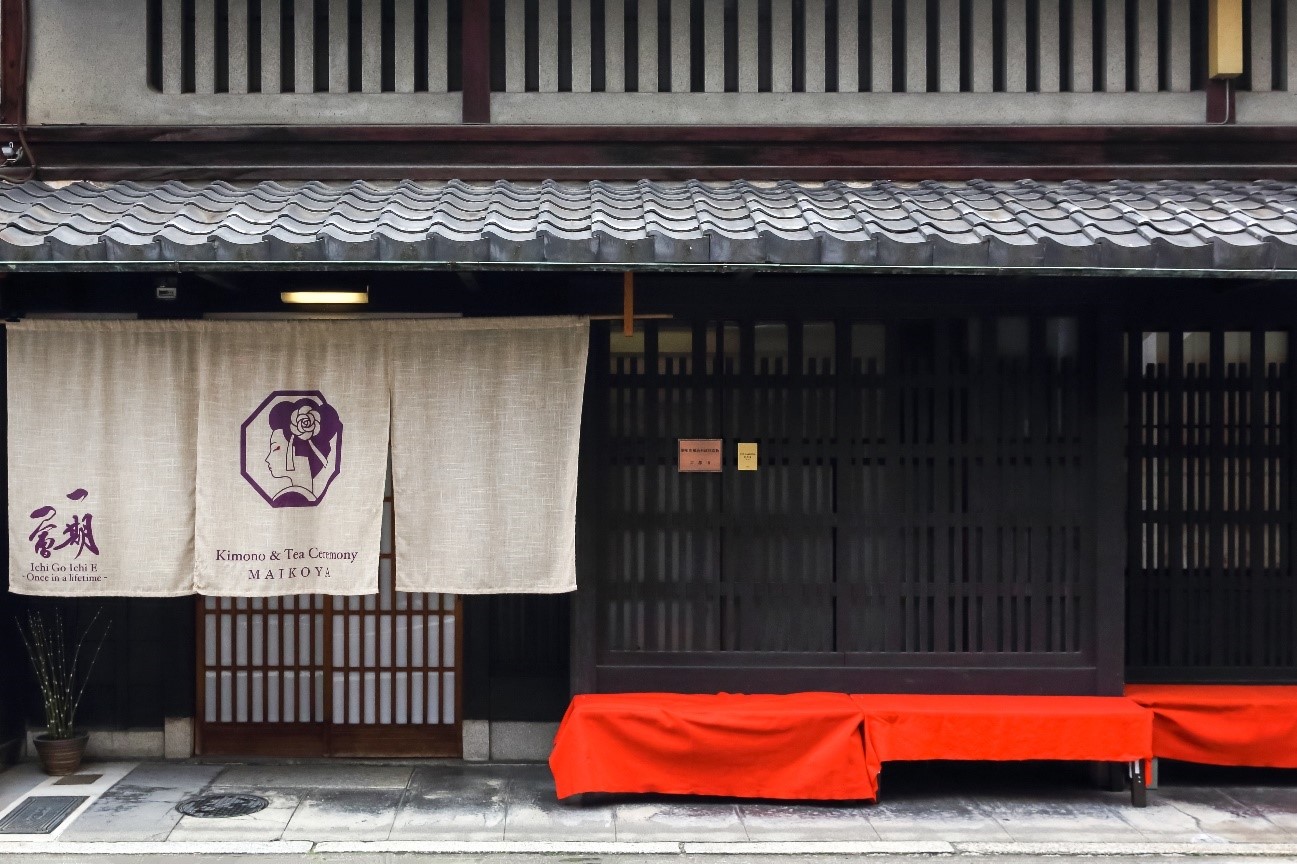
This large Kyoto townhouse, located along Miyukimachi Street, features a tea room, garden, and storehouse. The main building dates from the early to mid-Meiji period. Currently, it is used as a facility where visitors can experience unique Japanese culture, and it is popular with many people, including those from overseas. It is a designated Kyoto townhouse under the Kyoto Townhouse Ordinance and a building that contributes to the preservation of historical landscape.
> Designation system based on the Kyoto Machiya Ordinance
>Regarding buildings that contribute to historical landscape preservation (This will take you to the Kyoto City Information Center)
A large Kyoto townhouse dating back to the Meiji era, located in the heart of the city.
The Mizutani Residence is a large Kyoto townhouse located along Miyukimachi Street and owned by Mr. Mizutani, who runs an antique art business. It was originally purchased by Mr. Mizutani's father around 1950-1951, and served as both an art dealer's shop and the family's living quarters. Previously, his mother lived there alone, but since Mr. Mizutani took over management, it is no longer used as a residence, only being used a few times a year for tea ceremonies and dinner parties. Mr. Mizutani regularly visits the house and maintains it by himself. Maintaining a Kyoto townhouse is very difficult and requires regular maintenance. "It's a Kyoto townhouse where I've lived since I was a child, so I wanted to take good care of it and have been doing what I can," says Mr. Mizutani.
|
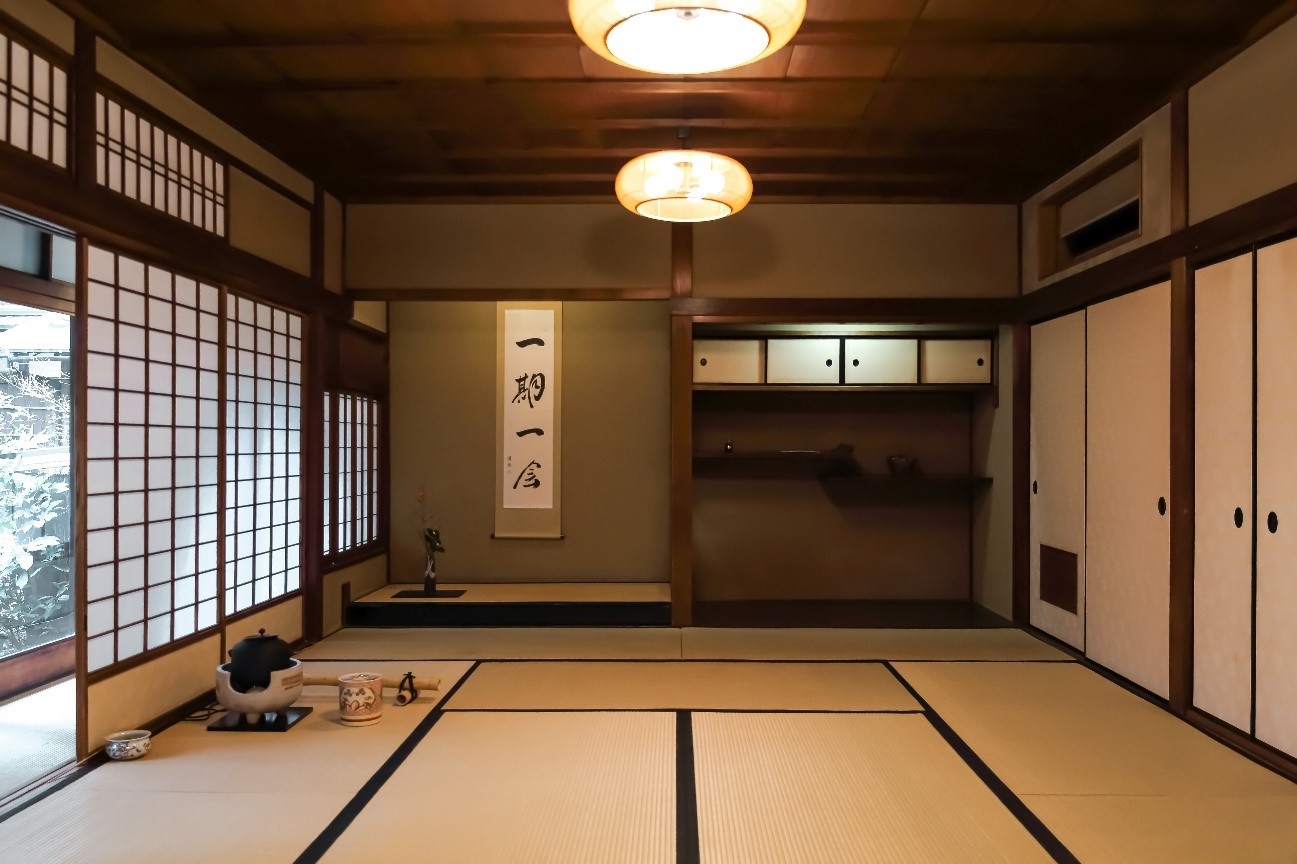
| The spacious main room on the first floor is adorned with seasonal flowers and a hanging scroll in the alcove. |
A place filled with precious memories from my childhood.
This Kyoto townhouse, where Ms. Mizutani lived from elementary school until she became independent, is filled with memories from that time. She would enjoy cherry blossom viewing under the cherry tree in the garden, be a little proud of the spaciousness of the house when she was in elementary school, and have friends come to stay over almost every night when she was a university student...
|
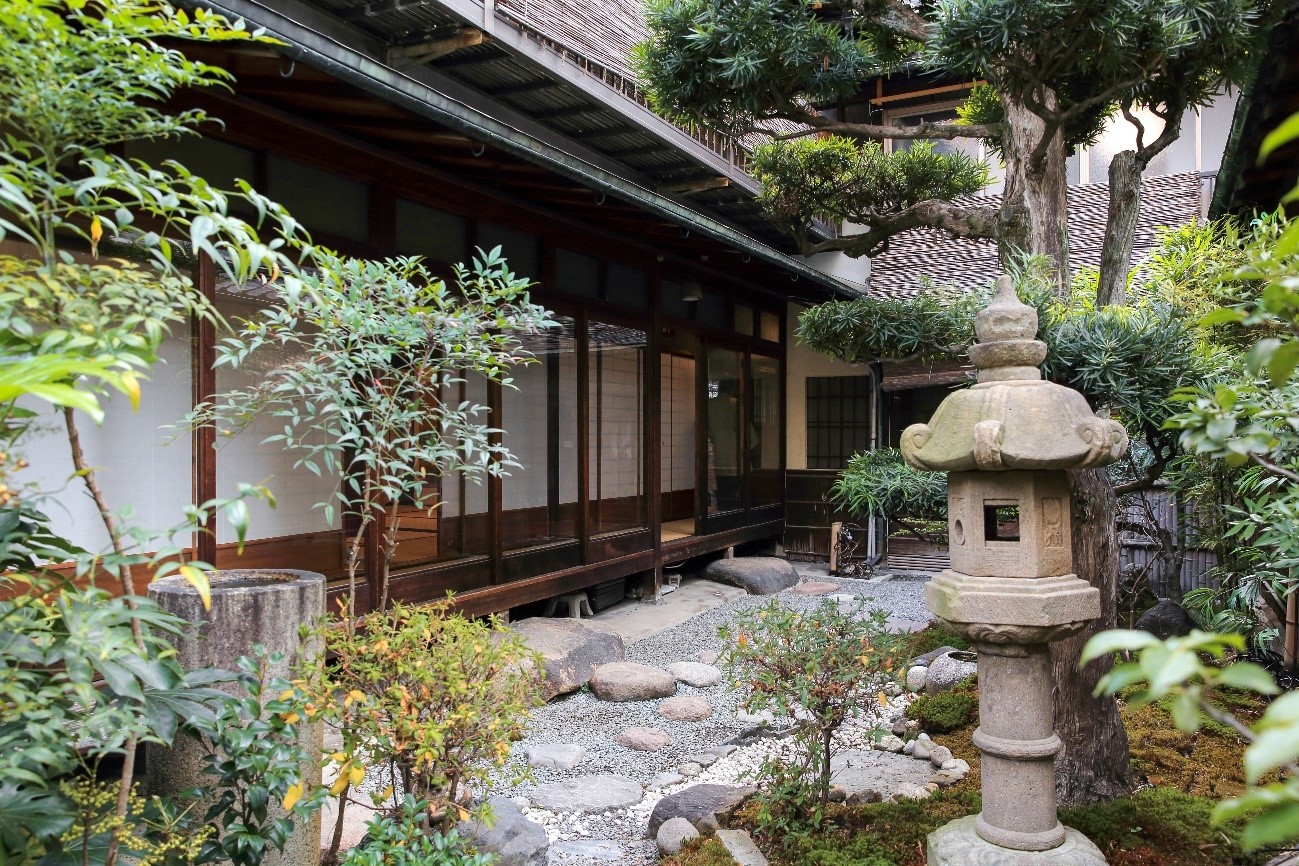
| In the garden, you can enjoy plants that change with the seasons. |
Because of the many memories associated with the Kyoto townhouse, Mizutani wanted to preserve it for the future and find someone who would take good care of it. He consulted a friend with knowledge of real estate, but couldn't find anyone suitable and was advised to turn it into a parking lot. Mizutani himself was thinking, "Maybe I have no choice but to demolish it..." when one day, he found a notice in his mailbox.
A single notice saved the area from demolition.
It was a notification that this Kyoto townhouse had been designated as an "individually designated Kyoto townhouse" under the Kyoto Townhouse Ordinance. When a townhouse is designated as an "individually designated Kyoto townhouse," it becomes mandatory to submit a "demolition notification" at least one year before commencing demolition. This is one of the Kyoto City's initiatives to preserve Kyoto townhouses, a system established to make people pause before demolishing a townhouse and consider preserving it. When I visited Kyoto City Hall to hear more about the system, I was introduced to the "Kyoto Townhouse Matching System." While I requested to use the system, thinking, "If this system can save my Kyoto townhouse full of memories...", I was also torn between preserving it and demolishing it, so I submitted a demolition notification as well.
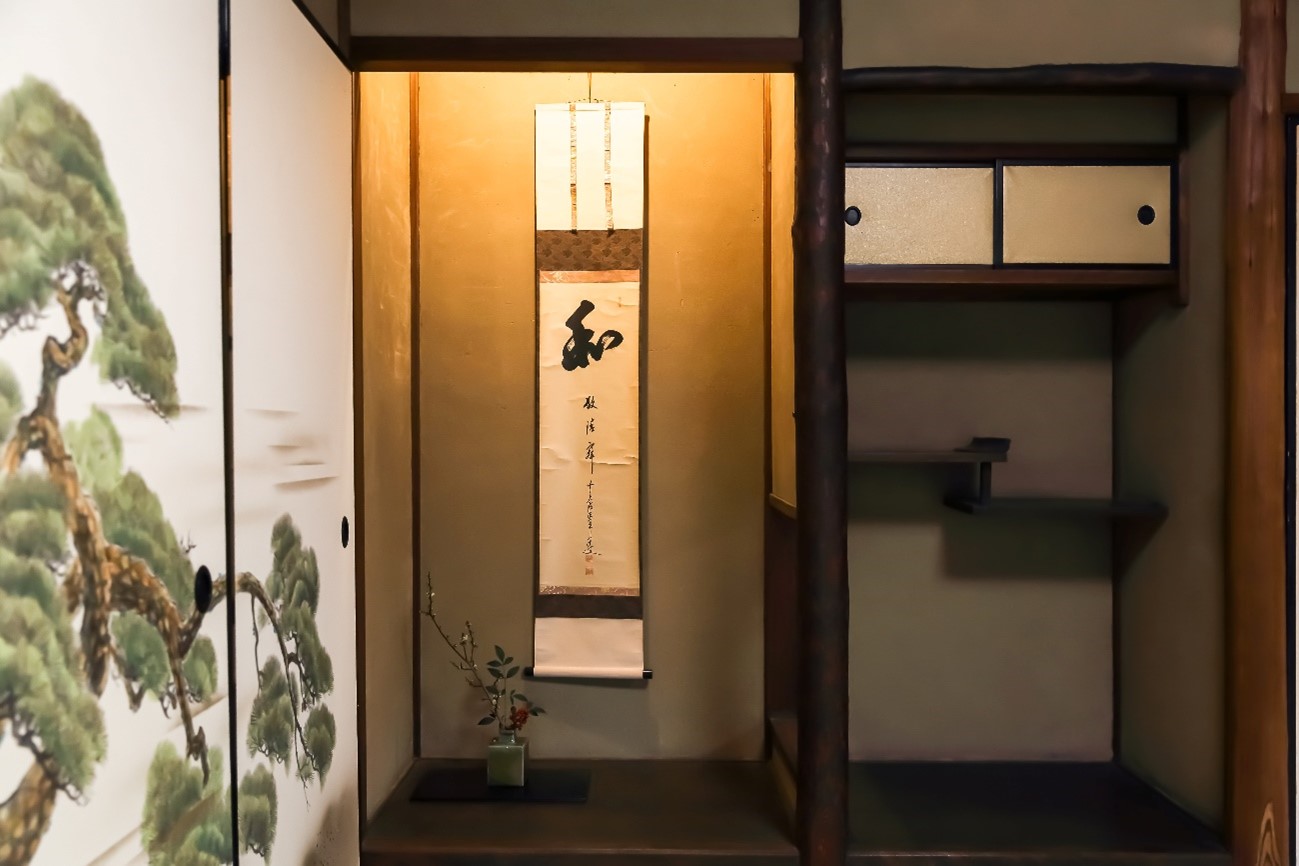
|
| The alcove in the large tatami room on the second floor. The different decorations in each room are one of the pleasures of visiting. |
A "Kyoto townhouse matching system" that connects owners and renters.
After that, they met people who wanted to rent the Kyoto townhouse, but the presence of a tea room and garden, along with the large number of rooms, made it "too spacious" for use as a restaurant, and the extensive renovations required for a restaurant were major obstacles, resulting in a prolonged period without a decision on how to utilize it. Then, in September 2020, a successful match was made with a company that operates a facility where people can experience Japanese culture, such as tea ceremony, flower arrangement, and kimono dressing, using the Kyoto townhouse as a stage. It turned out that the tranquil atmosphere of the Kyoto townhouse and its ability to flexibly use the large space by dividing it into individual rooms made it inherently well-suited for a business that promotes Japanese culture.

|
| A scene from a tea ceremony experience in a tea room. Even beginners can easily participate. |
The company that successfully matched with the property said, "Not only is the garden beautiful, but seeing the condition of the building, we could tell that it had been well cared for. We felt that we wanted to cherish Mr. Mizutani's feelings as well, so we decided to rent this Kyoto townhouse." Mr. Mizutani also said, "Thanks to Kyoto City, I was able to meet a good company, and I am very happy that we were able to preserve this Kyoto townhouse in the best possible way without changing its previous form." In fact, the Mizutani residence is the first successful case of the "Kyoto Townhouse Matching System." Not only did they submit a demolition notice, but by utilizing the Kyoto Townhouse Matching System, they guided the Kyoto townhouse into the future.

|
| The garden (roji) leading to the tea room. Three stone lanterns of varying sizes are placed there. |
"Preserving Kyoto townhouses is a very difficult task, so I don't know what the next generation will be like. However, personally, I love Japanese-style spaces, and I want to preserve Kyoto townhouses as much as possible," said Mizutani. "I was fortunate enough to become the first person to be included in the Kyoto townhouse matching system, and I hope that more people will do the same. For me, it was an action taken because I wanted to protect the Kyoto townhouse where I grew up, but I feel that such personal feelings have ultimately led to the preservation of Kyoto townhouses that Kyoto City is working on. If you are worried about the future of Kyoto townhouses, I suggest you consult with Kyoto City," she added.
Mizutani's vision is clearly conveyed to the tenants, and through careful utilization, the charm of the Kyoto townhouse is fully conveyed to those who come to experience it—Mizutani House is a Kyoto townhouse where such a synergistic effect is being fostered.