
Kyomachiya consultation
Our Kyoto Machiya Consultation Service offers free advice on a variety of matters related to the preservation and inheritance of Kyoto machiya (traditional Kyoto townhouses), including renovation, utilization, and inheritance. Please feel free to contact us.
【notice】
The "Kyoto Machiya Matching System" was integrated with the "Specialized Consultation" service of the Kyoto Machiya All-Purpose Consultation in September 2025. As part of the "Specialized Consultation," we will provide utilization proposals to owners upon their request. If you are interested, please first use the Kyoto Machiya All-Purpose Consultation service.
> Kyoto townhouse consultations
Kyoto townhouse lease (public subleasing program)
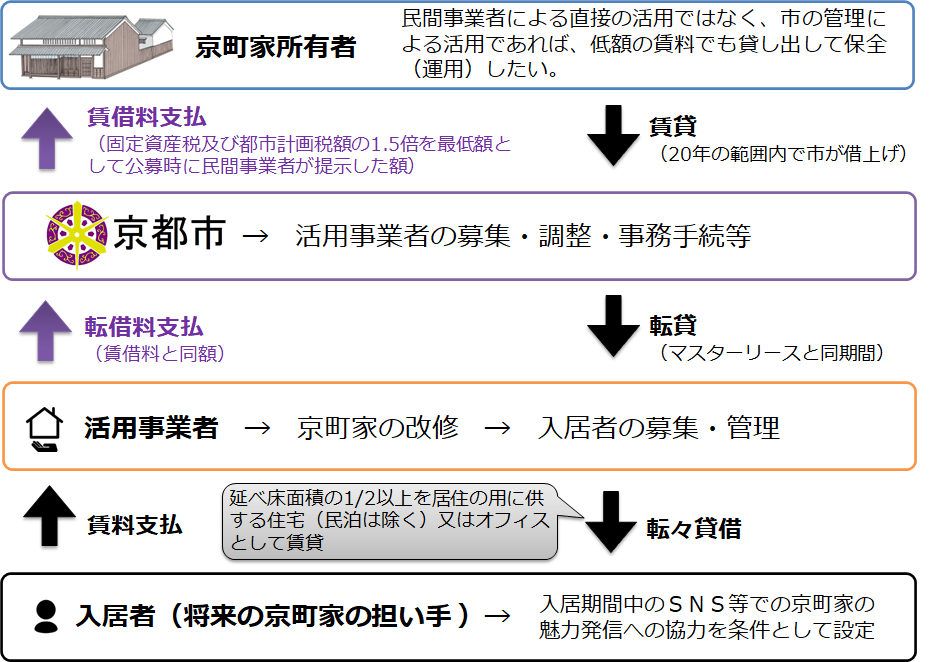
The Kyoto City Landscape and Urban Development Center (hereinafter referred to as "the Center") will launch "Kyoto Machiya Lease," a public subleasing program in which the Center will lease traditional Kyoto townhouses from their owners for a certain period and then sublease them to new users.
We accept consultations at the Community Center regarding Kyoto townhouses that you wish to utilize.
For more details, please visit the following dedicated website for renting traditional Kyoto townhouses.
> Dedicated website for renting Kyoto townhouses
Kyoto Machiya Rental Model Project *New applications are now closed.
We support owners of Kyoto townhouses who are hesitant to take the first step in utilizing their properties because they are unsure how to renovate them, or how to find a reliable business or tenant.
As the first model project,A traditional Kyoto townhouse that had been vacant for about five years is now being used as a satellite office and residence for an IT company in Tokyo.It is being done.
Also, as the second item,A traditional Kyoto townhouse that had been vacant for about 20 years is scheduled to be used as an office and employee residence for a construction company and an NPO.is.
* The Kyoto townhouses that will be the subject of the model project are:Individually designated Kyoto townhouses and Kyoto townhouses within designated areas based on the Kyoto Townhouse Ordinanceis.
> What is a designation based on the Kyoto Machiya Ordinance?
* Whether or not Kyoto townhouses can be used in the model project is,The Kyoto City government will make a decision based on factors such as the condition, location, and size of the Kyoto townhouse, as well as the budget situation.
Business overview
- Kyoto townhouses designated individually or within designated areas under the Kyoto townhouse ordinanceTherefore, if it is under the management of Kyoto City, they will show their intention to utilize it.※of,The amount calculated by Kyoto City based on the conditions presented by the project developer during the public bidding process, with a minimum of 1.5 times the amount equivalent to the fixed asset tax and city planning tax (land and buildings).We'll rent it out.
*The Kyoto City government will decide whether or not a property can be used as a model project, based on factors such as the condition, location, size, and budget of the traditional Kyoto townhouse. - Kyoto City is soliciting applications from businesses to utilize the service.death,The amount will be subleased to the user based on the conditions presented by the user during the public offering.I will.
- Businesses utilizing the serviceThis is necessary when utilizing Kyoto townhouses.Renovation and maintenanceThis includes the following (costs are borne by the user).
- After the lease term ends,Kyoto townhouses that are in a usable condition are returned to their owners.And it can be used for rental purposes afterward.
Lease term
Up to 20 years
*The decision will be made based on the wishes of the Kyoto townhouse owners.
Purpose
A house where more than half of the total floor area is used for residential purposes.
However, if the property is to be used as an office, at least half of the total floor area, excluding the residential portion, must be designated as office space (office or business premises of a company or organization).
Rent
The minimum amount is 1.5 times the equivalent amount of property tax and urban planning tax (land and building) for a traditional Kyoto townhouse, calculated based on the conditions presented by the prospective developer during the public bidding process.
*Until October 2023, the property tax and urban planning tax equivalent to that of a Kyoto townhouse (land and building) will be applied.
Consultation on how to use the service
If you wish to utilize a Kyoto townhouse in a model projectteeth,Kyoto City Machiya Preservation and Succession DivisionPlease contact us for further information.
Overview of Model Project No. 1
location
Mibu Higashidoi-no-uchi-cho, Nakagyo-ku, Kyoto City
Architectural year etc.
Built in the early Showa period (approximately 90 years ago), with a total floor area of 74.56 m², this is a Kyoto townhouse designated under the Kyoto Townhouse Ordinance.
Features
This Kyoto townhouse, with its three rooms arranged in a row, had been vacant for about five years and was built in the early Showa period. Since dyes and other materials remained in the shed in the back garden before the renovation, it is believed to have been used as a dyeing factory where people lived and worked together.
Uses of Kyoto townhouses
As a satellite office for an IT company based in Tokyo, they will be working to support manufacturing in Kyoto. In addition, to promote the charm of traditional Kyoto townhouses, the representative of the Kyoto office will live there and share their lifestyle on social media.
Press release
renovation
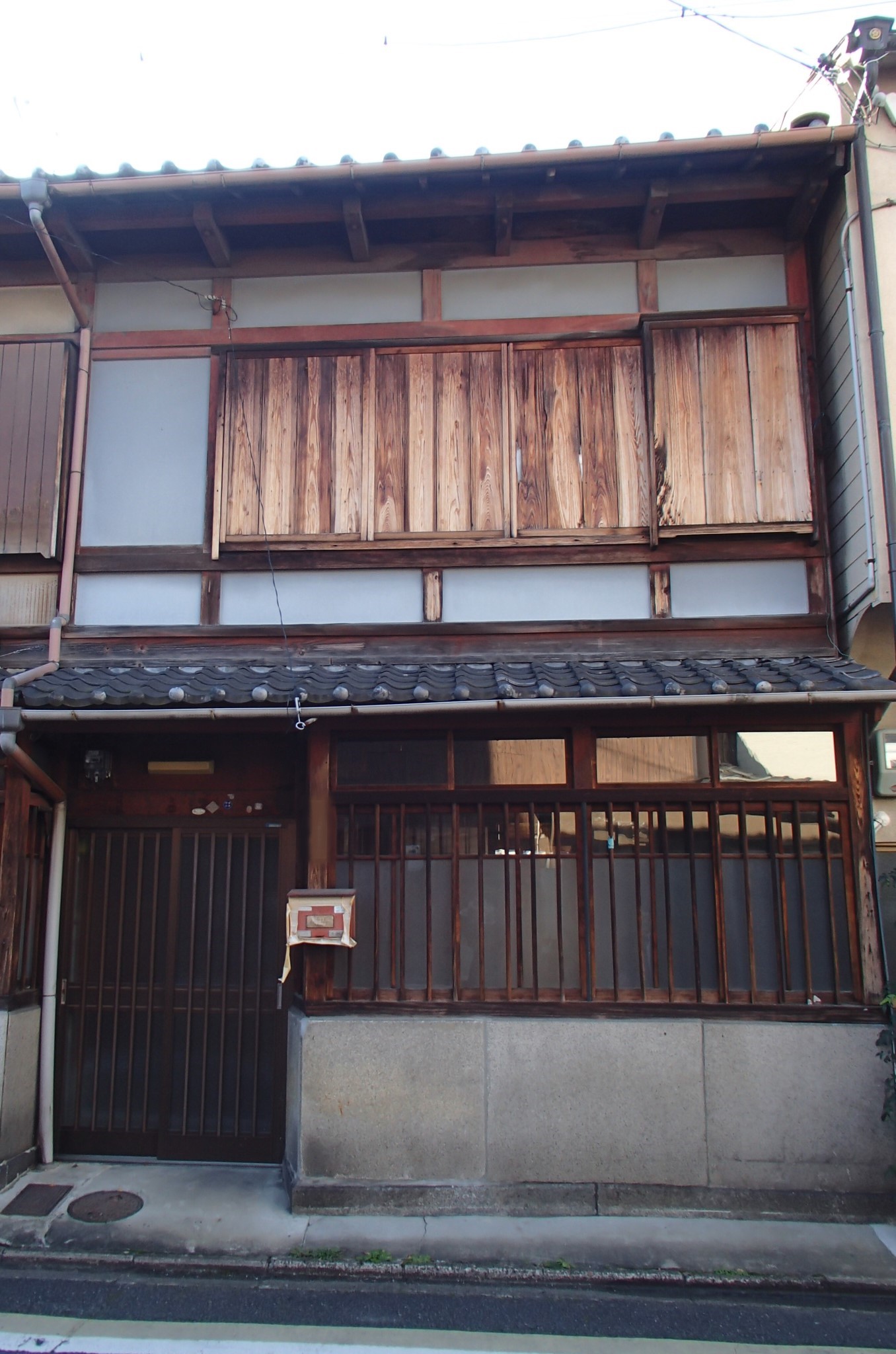
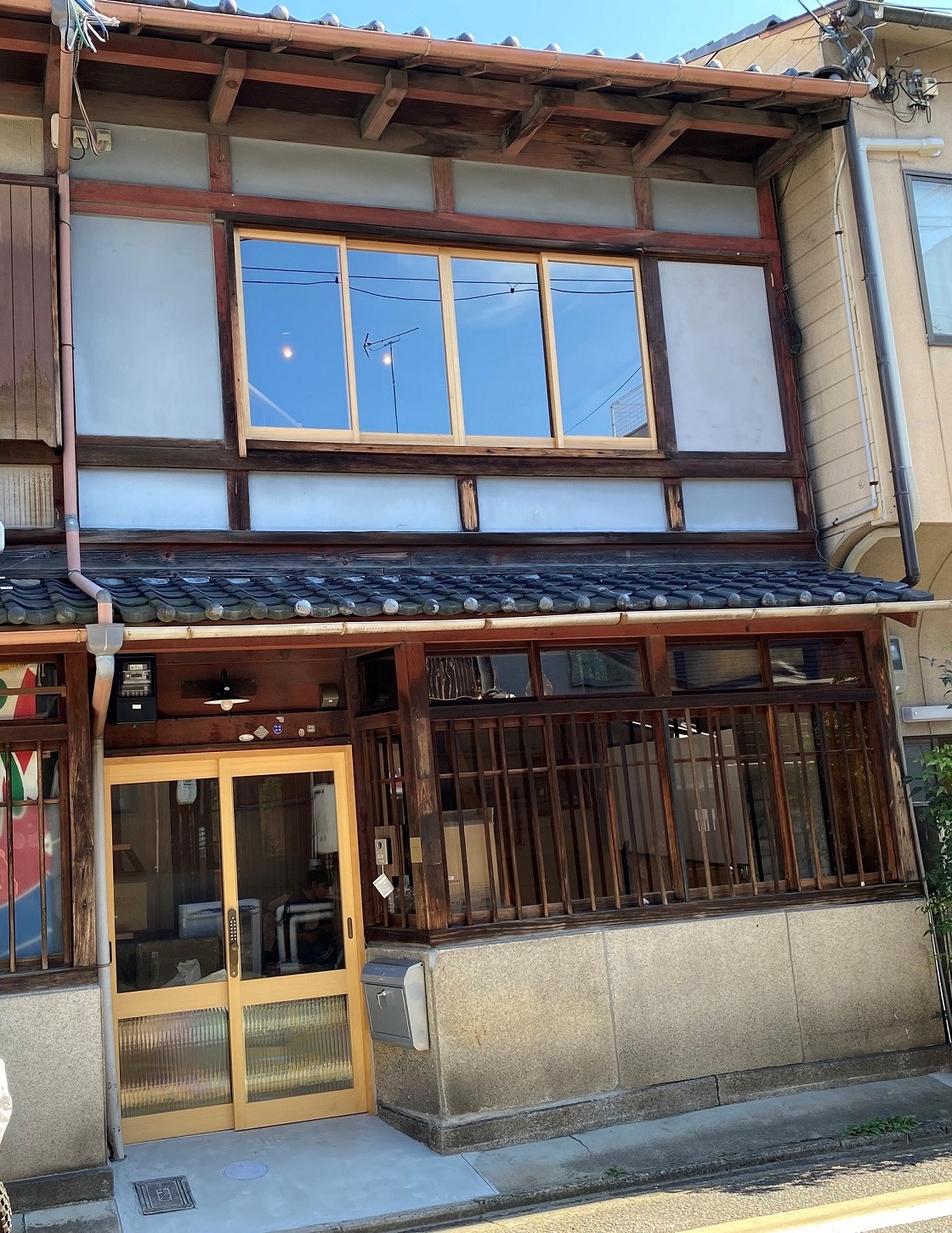
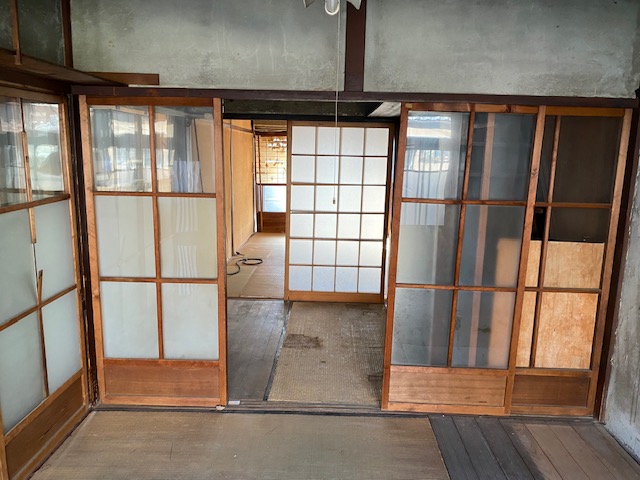
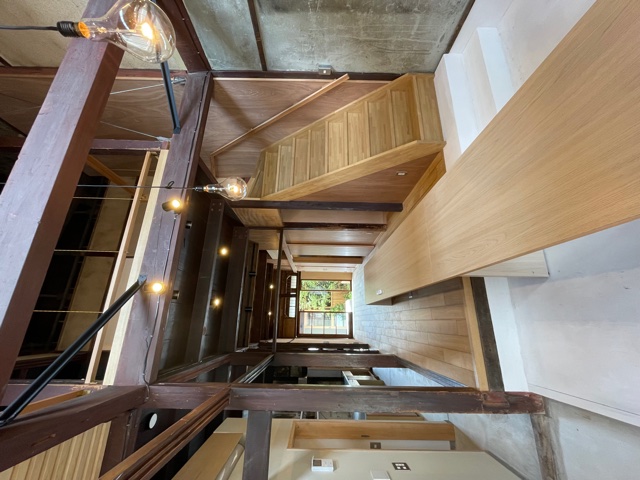
The building underwent renovations for practical use, and the approximately 90-year-old Kyoto townhouse was restored.
|
|
|
| Exterior (before renovation) | Exterior (after renovation) |
|
|
|
| Interior view (before renovation) | Interior view (after renovation) |
Overview of Model Project No. 2
location
Jurakumawari Nishimachi, Nakagyo-ku, Kyoto City
Architectural year etc.
Built around 1921 (100 years ago), with a total floor area of 219.82 m², this is a Kyoto townhouse designated under the Kyoto Townhouse Ordinance.
Characteristics and progress
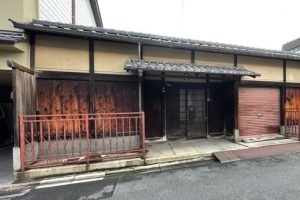
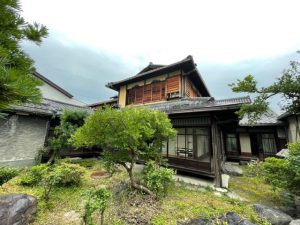
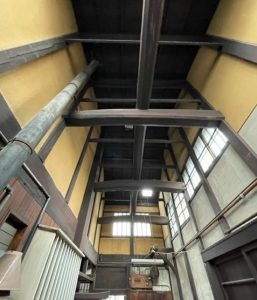
This large Kyoto townhouse (commonly known as the Juraku Ikai Residence) was built in the Taisho period by a timber merchant and features a large wall. It is a luxurious structure that uses rare timber and the skills of master craftsmen in various places. Later, the grandfather of the current owner, Mr. Ikai, purchased it and lived there with his family, using part of it as an office. However, after the family moved to Sakyo Ward, it remained vacant for about 20 years, and the building was in a state of deterioration.
Uses of Kyoto townhouses
The original Kyoto townhouse has been subleased to Gion Naito Construction Co., Ltd. (Representative Director: Tomohiro Naito), and is being used as an office and employee residence for the company and the NPO Gishōkai* (renovation is planned to begin in the future to serve as employee housing). The renovation will be carried out by the company, and a portion of it will be handled by the NPO as a place to teach young people involved in architecture the techniques of building townhouses. Furthermore, the initial renovation will be limited, and the house will be gradually renovated to become more livable based on the actual experiences of employees who live in the townhouse.
Furthermore, through this use, the lifestyle in the traditional Kyoto townhouse, the changing seasons in the garden, and the craftsmanship evident throughout will be shared on social media, and the charm of Kyoto townhouses will be promoted by allowing various people to experience them through their use as event venues and tours.
* This organization was established by the company to preserve and pass on the techniques of building traditional Kyoto townhouses. It holds seminars and lectures for young people in the architecture field who aspire to learn traditional Kyoto building techniques. (Established in December 2020)
Press release
Renovation (Preparations for renovation are underway)
 |
 |
 |
| (Before renovation) | ||
Overview of Model Project No. 3
location
Kamijuzuyacho, Shimogyo-ku, Kyoto City
Architectural year etc.
- Unknown *There are records indicating it existed in 1876 (Meiji 9) (over 147 years old).
Total floor area: 94.86 m²
Kyoto townhouses located within the designated area under the Kyoto Townhouse Ordinance (Hongwanji area Kyoto townhouse preservation and inheritance area)
Characteristics and progress
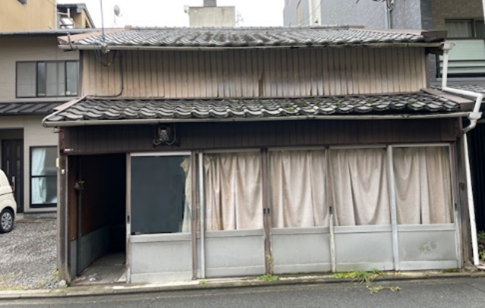
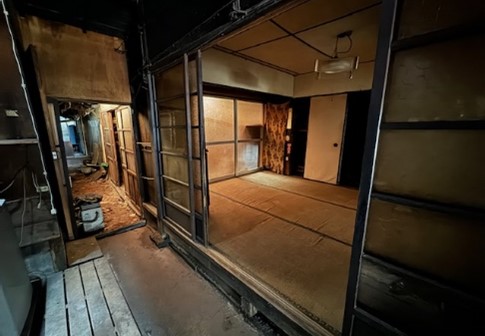
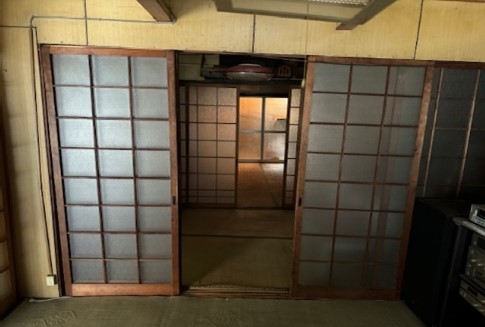
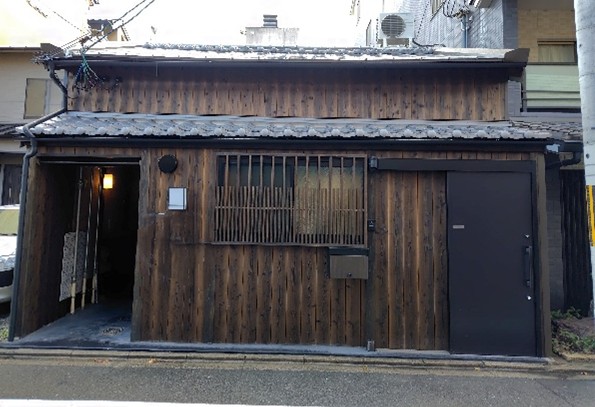
This is a single-story Kyoto townhouse built during the Meiji period. For many years it was rented out as a residence, but after the previous tenants moved out, it remained vacant for several years, and the building was deteriorating.
Uses of Kyoto townhouses
The Honkyomachiya will be subleased to a developer and used as both accommodation and company housing. The plan is to use the Honkyomachiya and the former accommodation facility on the adjacent property as a single integrated building (Honkyomachiya: annex, former accommodation facility on the adjacent property: main building). By using a portion of the Honkyomachiya as company housing for the business partner (NAZUNA Co., Ltd.), the younger generation of employees will become local residents and contribute to the revitalization of the temple town area as vibrant contributors to the community.
After the renovation, we will hold a completion ceremony and continue to host events in collaboration with local residents and businesses to create a place for interaction among local residents, tenants, hotel guests, and other stakeholders, thereby revitalizing the entire temple town area.
* A "monzen-machi" refers to a town that developed around a shrine or temple.
Press release
renovation
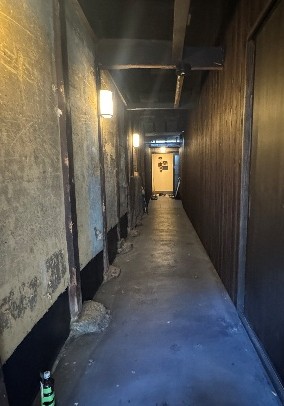
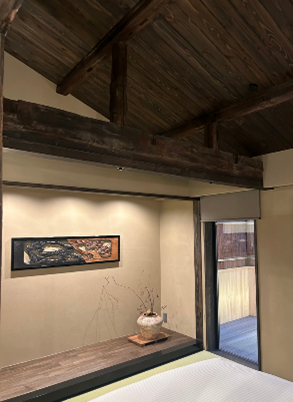
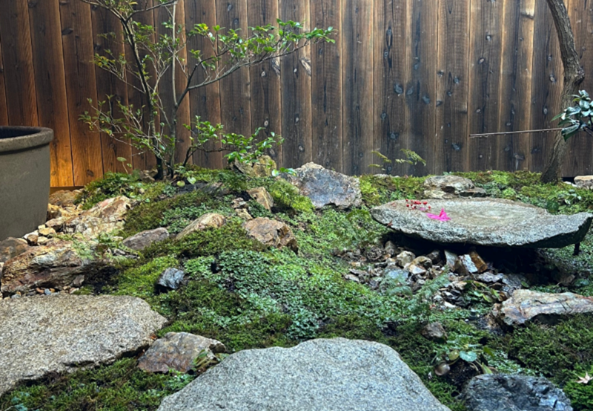
Renovations were carried out for its repurposing, and the Kyoto townhouse, which is over 100 years old, was restored.
 |
 |
 |
| (Before renovation) | ||
 |
 |
 |
 |
| (After renovation) | |||
Using a Kyoto townhouse as an office
> Go to the special page on "Using Kyoto townhouses as offices"
Utilization and distribution support for vacant houses
With the aim of promoting the utilization and distribution of vacant houses, we will dispatch experts (architects and local vacant house consultants) to owners or managers who wish to utilize or distribute vacant houses to provide advice and information on utilization methods and to diagnose the deterioration status of the vacant houses (free of charge).
> Kyoto City's Vacant House Utilization and Distribution Support Expert Dispatch Program (This link will take you to the Kyoto City Information Center)
> Application form for expert dispatch (This will take you to the Kyoto City Information Center)
> Application form for expert dispatch [Mobile version] (You will be redirected to the Kyoto City Information Center)
What is a local vacant property consultant?
These are "local real estate agents" registered with Kyoto City after receiving training, offering free consultations about vacant properties. You can contact them directly using the list on their website.
Examples of Kyomachiya use
> Go to the "Examples of Kyoto Machiya Utilization" page
> To "Match-ya"'s Stories
Certified Kyomachiya business related to residential accommodation business
A residential lodging business (certified Kyoto townhouse business) that meets the requirements such as having the distinctive form and design of a Kyoto townhouse in both its exterior and interior, and that also meets all of the following conditions, will not be subject to the restrictions on the operating period of residential lodging businesses in residential-only areas.
(1) The maximum number of guests is limited to 9 people or less (only one group).
(2) Provide a face-to-face explanation of the characteristics and history of the Kyoto townhouse to be used, as well as the lifestyle and culture that has been passed down there.
* When explaining the situation to guests, please explain that they will be living in the heart of Kyoto, that residents have historically lived in mutual consideration, and encourage them to be mindful of the surrounding residential environment during their stay.
(3) A local response manager shall be appointed within a range that the mayor deems necessary to build trust with local resident organizations.
> Home-sharing business (This will take you to the Kyoto City Information Center)
1. Requirements for Certified Kyoto Machiya Project
The requirements for the Certified Kyoto Machiya Project are as follows:
(1) The Kyoto townhouse where the residential lodging business is operated must have the following form and design:
A. A tiled roof
(i) Exterior wall or high fence adjacent to the neighboring property
(c) Any of the following forms
- A passageway (a long, narrow earthen floor area extending from an entrance facing the street).
- Firebox (referring to a long, narrow, open section.)
• Courtyard garden or back garden
E. Designs listed in any of the following:
- Street eaves (referring to eaves built along a road.)
・ Lattice (limited to traditional styles)
(2) The plan must include specific details regarding the methods and content of face-to-face explanations about the characteristics and history of the Kyoto townhouse to be used, and the lifestyle and culture that has been passed down there.
(3) Having established a system that enables the implementation of the plan in (2).
* The definition of a Kyoto townhouse is based on Article 2, Paragraph 1 of the "Kyoto City Ordinance Concerning the Preservation and Succession of Kyoto Townhouses."
> Definition of a Kyoto townhouse as defined in the Kyoto Townhouse Ordinance
2. Application for certification of certified Kyoto townhouse projects
Contact: Urban Planning Bureau, Urban Regeneration and Creation Promotion Office (Kyoto Machiya Preservation and Succession Section)
(1) Please attach the necessary documents (see the appendix to the "Guidelines for the Kyoto City Certified Machiya Project") to the following application form and submit two copies (original and copy) to the Machiya Preservation and Succession Section.
(2) Once it is confirmed that the certification requirements are met, a certification notice will be issued.
(3) When submitting the notification under the Housing Accommodation Business Act, please attach the certification notice for the certified Kyoto townhouse business.
* The contact point for receiving notifications under the Residential Accommodation Business Act isHealth and Welfare Bureau, Medical and Public Health Promotion OfficeThis is what it will be.
Application form
>Certified Kyomachiya Business Certification Application Form (Word)
> Example of how to fill it out (PDF)
Guidelines for the Kyoto City Certified Machiya (Traditional Kyoto Townhouse) Project
> Guidelines for the Kyoto City Certified Machiya (Traditional Kyoto Townhouse) Project (PDF)