
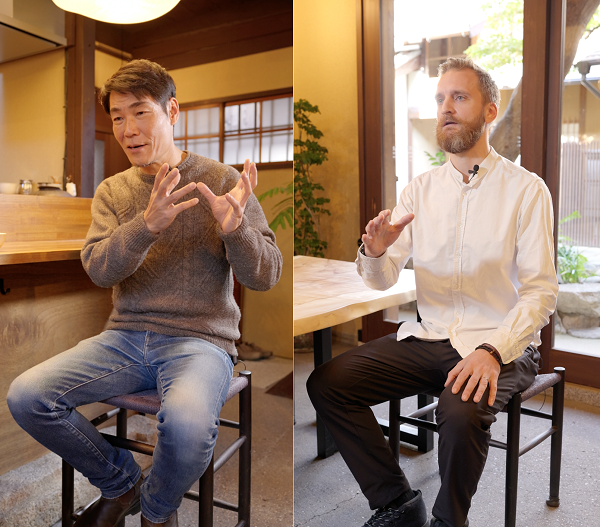
In Ishifudō-machi, Shimogyo-ku, Kyoto City, there is an alley called "Momiji noalleyThere is a place called "Momiji no Komichi". Beyond the narrow alley facing the street, a space surrounded by Kyoto townhouses unfolds, offering a view that is distinctly different from the outside world. Warrin Drew Kent, who manages "Momiji no Komichi" and runs "Garden Lab" within it, and Tamura, who is in charge of managing "O5 Kyoto Rare Tea Bar," where you can enjoy various teas, at "Garden Lab."啓We asked Mr./Ms. [Name] to tell us about the reasons and thoughts behind their decision to utilize a traditional Kyoto townhouse.
Profile of a Kyoto townhouse
"Momiji no Komichi" (Maple Lane) is comprised of nine renovated Kyoto townhouses, each over 100 years old. In the courtyard, the maple tree that gives the lane its name stands out. Inside, it is a complex of Kyoto townhouses used in a variety of ways, including "Garden Lab," "O5 Kyoto Rare Tea Bar," a coffee shop, restaurants, and an architectural design office.
Profile of Warrin Drew Kent
Originally from Canada. Manager of Momiji no Komichi (Maple Path). CEO of Garden Lab Co., Ltd. Operates a co-working space, event and accommodation facilities, and "O5 Kyoto Rare Tea Bar" under the name "Garden Lab." During his student years, he transferred to Kyoto University Graduate School to research "Kyoto townhouses and gardens."
> Garden Lab / O5 Kyoto Rare Tea Bar (This link will take you to an external website)
Profile of Kei Tamura
Representative Director of TABIKYO JAPAN Co., Ltd. Representative Director of O5 TEA JAPAN. While serving as the representative director of TABIKYO JAPAN Co., Ltd., which works to solve local issues by re-editing them based on global standards and disseminating them to the world, he also serves as the representative director of O5 TEA JAPAN, the Japanese subsidiary of the "Tea Bar" (tea wholesaler) brand located in Vancouver, Canada.
>TABIKYO JAPAN (This link will take you to an external website)
A bridge to convey the charm of Japan to the world.
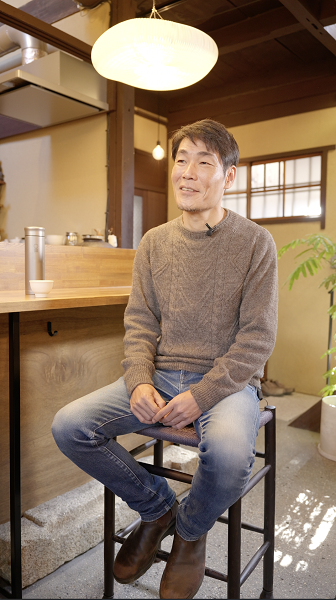
Ms. Tamura focuses on conveying the cultural appeal of Japan and the enjoyment of unique local cultures to the world from a global perspective, and is actively involved in a wide range of activities throughout Japan to act as a bridge for this purpose.
Having worked abroad for a long time and seen many countries, she says that there were many situations where the charm of Japan was not properly conveyed or was misunderstood.
"It's natural that foreigners don't know much about Japan because they don't know much about it. We need a source of information to solve that problem. If they actually come to Japan and experience the genuine meticulousness of the Japanese people, they will realize its unique charm. Among the many charms of Japan, we must especially protect the delicacy and meticulousness of the craftsmanship," says Tamura.
|
The exotic charm created by "Kyoto townhouses x tea"
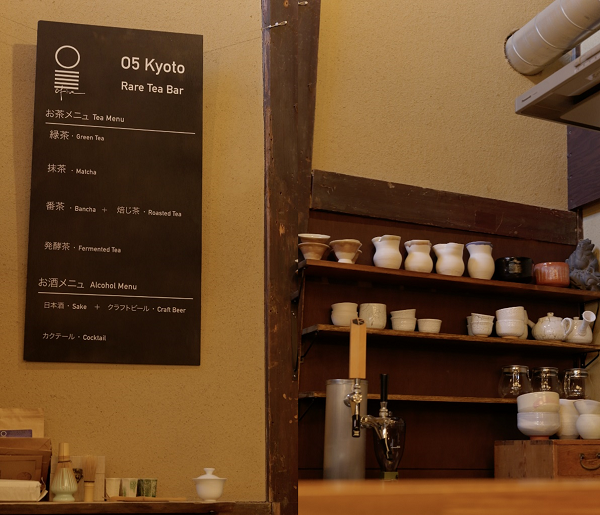
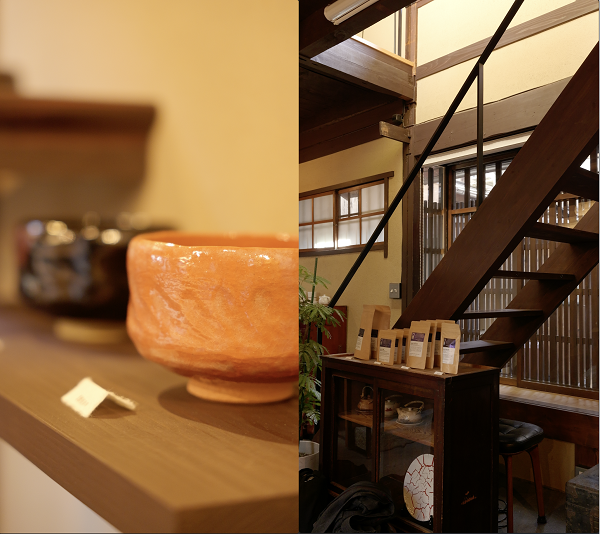
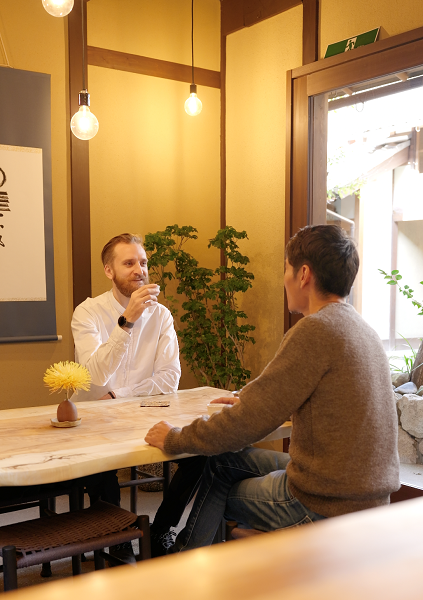
In Japan, a major agricultural country, Ms. Tamura has had many opportunities to interact with tea while working on regional issues throughout the country. At "O5 Rare Tea Bar," a tea wholesaler in Vancouver, Canada, many customers are tea fans who enjoy tea and are also interested in the Orient. Ms. Tamura realized that the number of people interested in tea is increasing worldwide, and at the end of 2022, when she was thinking of expanding the "O5 Rare Tea Bar" system in Japan to help boost the Japanese tea industry, she introduced Pedro Villalon, the representative of "O5 Rare Tea Bar," and the company's concept to Mr. Warin and proposed opening "O5 Kyoto Rare Tea Bar" at "Garden Lab" (with "Garden Lab" as the operating entity). It was perfect timing for Mr. Warin, who was reviewing the use of the exchange space at "Garden Lab," and for Ms. Tamura, who was looking for a place to expand her tea business. Apparently, it wasn't just any location that would do, but Tamura explains his reason for suggesting to Warrin that they open a "Tea Bar" in a traditional Kyoto townhouse as follows:
"The Kyoto townhouse space in 'Momiji no Komichi' that he (Wallin) maintains reflects the craftsmanship, his own meticulousness, and his deep understanding of Kyoto townhouses. I saw in him, even more than in myself, a Japanese person, that he is truly Japanese. The combination of 'Kyoto culture' and 'tea' is very exotic for foreigners visiting Japan. I thought that those who visit this space will not only enjoy the tea but also learn about the many charms that Kyoto townhouses possess."
|
Kyoto townhouses become a platform for encountering culture.
For Ms. Tamura, there are certain comments from visitors that leave a lasting impression. More than the common phrase, "The tea was delicious," she is particularly moved by comments like, "I learned so much," and "I learned so many things." At these moments, she strongly feels that Kyoto townhouses are becoming a "platform for foreigners to encounter culture." As someone who works to convey the charm of Japan to the world, hearing these words from her customers is one of the moments when she feels that her work is truly worthwhile.
|
"I am in Kyoto"
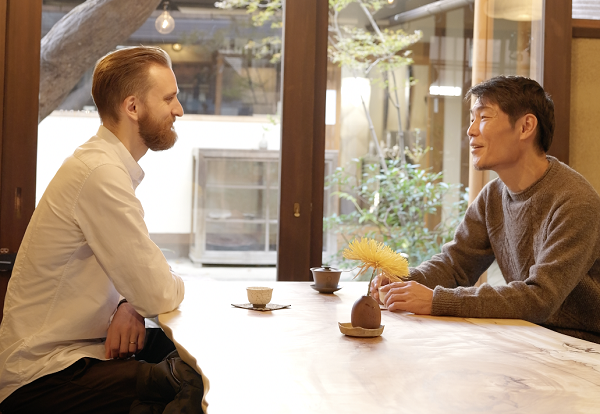
Currently, many people from all over the world are visiting Kyoto for sightseeing and other purposes. Ms. Tamura analyzes that this is because they want to experience Kyoto's culture, including its traditional Kyoto townhouses, in other words, to feel "I am in Kyoto."
"I want the Japanese people themselves to rediscover the charm of Japan, and the charm of Kyoto, which is attracting attention from people all over the world."
That is the ultimate goal that Ms. Tamura, who works every day to convey the charm of Japan to the world, is aiming for.
|
Transforming traditional Kyoto townhouses into wonderful spaces where people from Japan and abroad can interact.
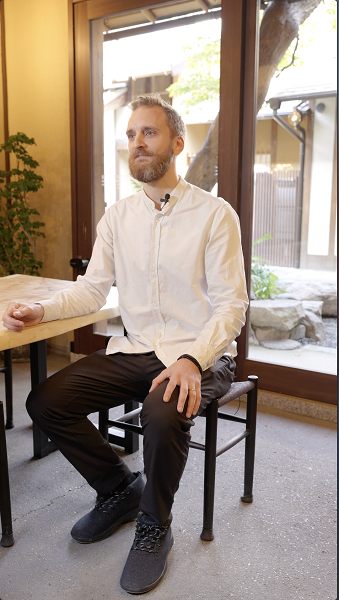
While managing Momiji no Komichi (Maple Lane), Warrin also runs "Garden Lab," a co-working space, event venue, and accommodation facility located within Momiji no Komichi, in a Kyoto townhouse that is over 100 years old. "Garden Lab" was established with the aim of inviting many people from both Japan and abroad to come and interact in the wonderful space of a Kyoto townhouse.
Worlin, originally from Canada, studied Kyoto townhouses (Kyomachiya) at Kyoto University Graduate School during his student days. He was drawn to the "ambiguity of boundaries" in Kyoto townhouses. "In Canada, most houses have thick walls, and the boundary between the inside and outside of the house is clear. On the other hand, Kyoto townhouses have a wonderful abundance of spaces, such as noren (curtains) that serve as walls, earthen floor spaces that are both inside and outside, and verandas, passageways, back gardens, and courtyard gardens," says Worlin. He wanted to experience both "living" and "working" in such an environment, so he started the company that would become "Garden Lab." He also came to want more people to have this kind of cultural experience.
|
An encounter with the maple-lined path
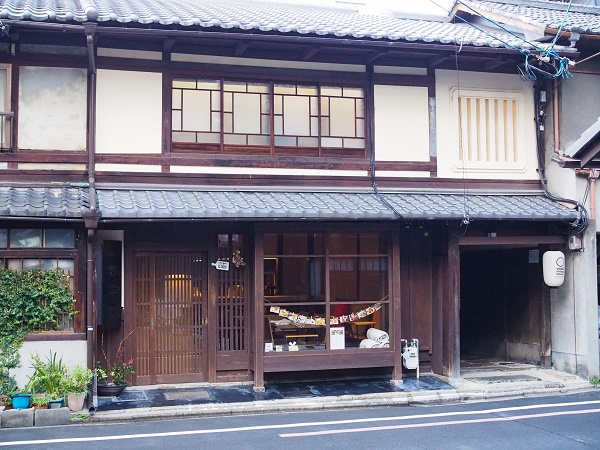
During the time of the company that preceded "Garden Lab," Warrin heard from the owner of the Kyoto townhouse he was renting as an office and residence that the townhouse (now known as Momiji no Komichi) had been vacant for about 40 years and was going to be renovated. Warrin, who was a graduate student at the time, wanted to help in any way he could, so he introduced gardeners and participated in design meetings. He realized that when there is a garden shared by multiple Kyoto townhouses like Momiji no Komichi, there needs to be someone to maintain it, so he volunteered to take on the role of manager of Momiji no Komichi. "I had the idea that it would be great to utilize the Kyoto townhouses of Momiji no Komichi, provide an environment where various people can work in Kyoto townhouses, and also take on the role of manager," says Warrin.
|
The breathtaking scenery that unfolds beyond the alley
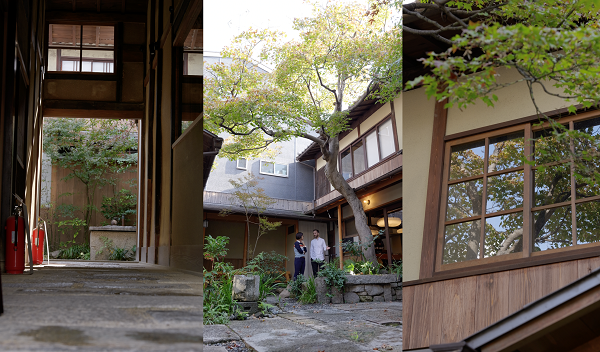
A distinctive feature of Momiji no Komichi (Maple Lane) is the large courtyard with beautiful maple trees, which is shared by multiple Kyoto townhouses. Of course, because it is a shared space, the relationships and rules among the tenants are also important.
Beyond the alleyway of Momiji no Komichi lies a wonderful space that is unimaginable from the street outside, and visitors to the courtyard are always surprised and moved by it. Many people love this space, which combines the newness that can only be felt from a beautifully renovated Kyoto townhouse with the oldness that can be felt from traditional construction methods and earthen walls, and Warrin says, "We are here to give people this kind of feeling of awe."
|
I want to make Kyoto a place that makes people want to come back again.
In today's world, many buildings could be found in any country or location, but traditional Kyoto townhouses (Kyomachiya) exist only in Kyoto. If these townhouses disappear, an important part of Kyoto's culture will be lost. Warrin expresses his concern about this crisis as follows:
"Many tourists who visit Kyoto primarily come to see famous landmarks like Kiyomizu-dera Temple, but in order to make them want to return, the city needs to have streets that inspire conversations like, 'I happened to wander down that alley one day and found a really great shop.' Whether Japanese or foreign, what tourists remember most about Kyoto is the discovery they make while exploring the city and finding something truly inspiring. If these streetscapes disappear, those discoveries will also disappear, and people will stop wanting to return. To prevent Kyoto from becoming a place where people only visit the sights once and never want to come back a second time, I sincerely hope that the traditional Kyoto townhouses will be preserved."
|
Flexible and wonderful architecture
Mr. Warrin actually has experience using a traditional Kyoto townhouse as a mixed-use building, with the first floor serving as a shop and the second floor as his residence. He says that it offered both a comfortable living and working environment.
"The ability to 'do both' is something that I find difficult in terms of zoning when it comes to houses overseas, but I think Kyoto townhouses, which can be used for next-generation purposes, are the perfect building for startups and people who want to develop businesses through remote work. Whether it's a row house or a detached house, it's a wonderful building that can be flexibly adapted to the purpose. That's Kyoto townhouses."
"Specific uses include workshops for creating things or for computer work. There are so many ways to use it, and it can evolve through renovations. I think that's the wonderful thing about Kyoto townhouses."
And finally, he said, "Limit is your imagination. Anything is possible if you can imagine it. It all depends on your imagination."
--Warrin, who has researched and actually used Kyoto townhouses himself, was able to speak about the wonderful qualities of Kyoto townhouses in a way that only he could, and that was evident throughout the interview.
|