
itonowa, a place for cultural exchange connected in a traditional Kyoto townhouse.
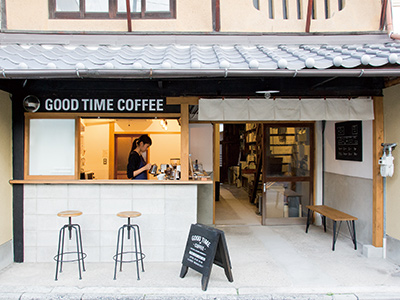
Itonowa was born in the Shimabara area, which once had a geisha district and flourished as a textile town, as a spot for cultural exchange. Centered around a local kimono shop, and joined by architects, designers, and other members involved in urban development, a 33-meter site that stretched from a vacant Meiji-era townhouse across a courtyard to a Showa-era building was transformed into a collection of shops related to yarn and workshops for craftsmanship.
The concept is "a place where people connect and enjoy culture." By living alongside local residents and discovering local culture, a system is created where people naturally gather, playing a key role in revitalizing the town.
Key points of the renovation
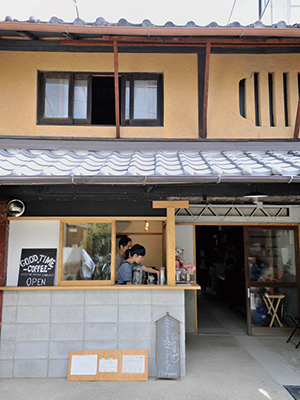
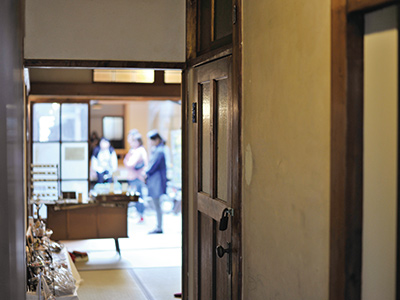
To preserve the unique charm of the Kyoto townhouse, the renovation was undertaken with the aim of altering the exterior and floor plan as little as possible. While improvements were made to ensure structural safety and the design was renewed, materials such as glass and roof tiles used in the original house were reused, and antique fixtures purchased from a joinery shop were used, demonstrating a careful consideration of the original structure. Furthermore, in order to use the space as a commercial facility, the owners consulted with the Kyoto City government regarding regulations on outdoor advertising, showing their consideration for the surrounding area.
Businesses that utilized
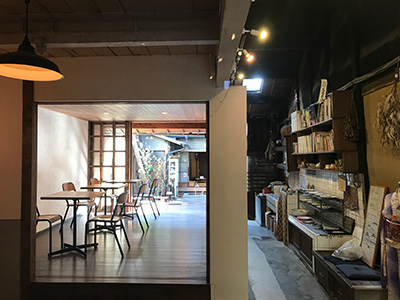
While considering ways to raise funds for the revitalization of vacant houses, they learned about the "Vacant House Utilization x Community Development" model project, a project by Kyoto City to promote the use of vacant houses. They discussed with an art director member how to engage with the community while utilizing a traditional Kyoto townhouse, and with the cooperation of people from various backgrounds, they applied for the project.
The innovative idea of connecting two vacant houses facing back-to-back, one on the main street and the other on a back alley, and utilizing the space bordering both the east and west roads as a single facility, was highly praised and selected after a rigorous review process.
Interactions born from Kyoto townhouses
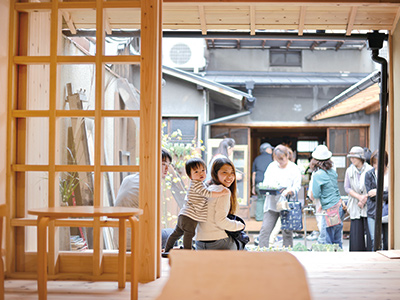
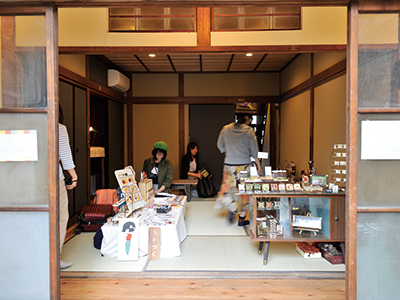
The facility houses restaurants that use ingredients sourced from local shops and the central market, a kimono shop with children's designs, a gallery produced by an antique shop, and an antique shop specializing in vintage fabrics. When the facility opened, the organizers, with the help of university students connected to each member of the management team, personally visited approximately 600 households in the surrounding area to introduce their efforts and make it a place where everyone in the community could gather. Thanks to their efforts, a place for cultural exchange has been created in an area that is aging and seeing an increase in vacant houses, bringing back vibrancy to the community.
Shimabara is a region rich in history and culture. They hope to continue creating new attractions while cherishing the traditional charms of the area.