

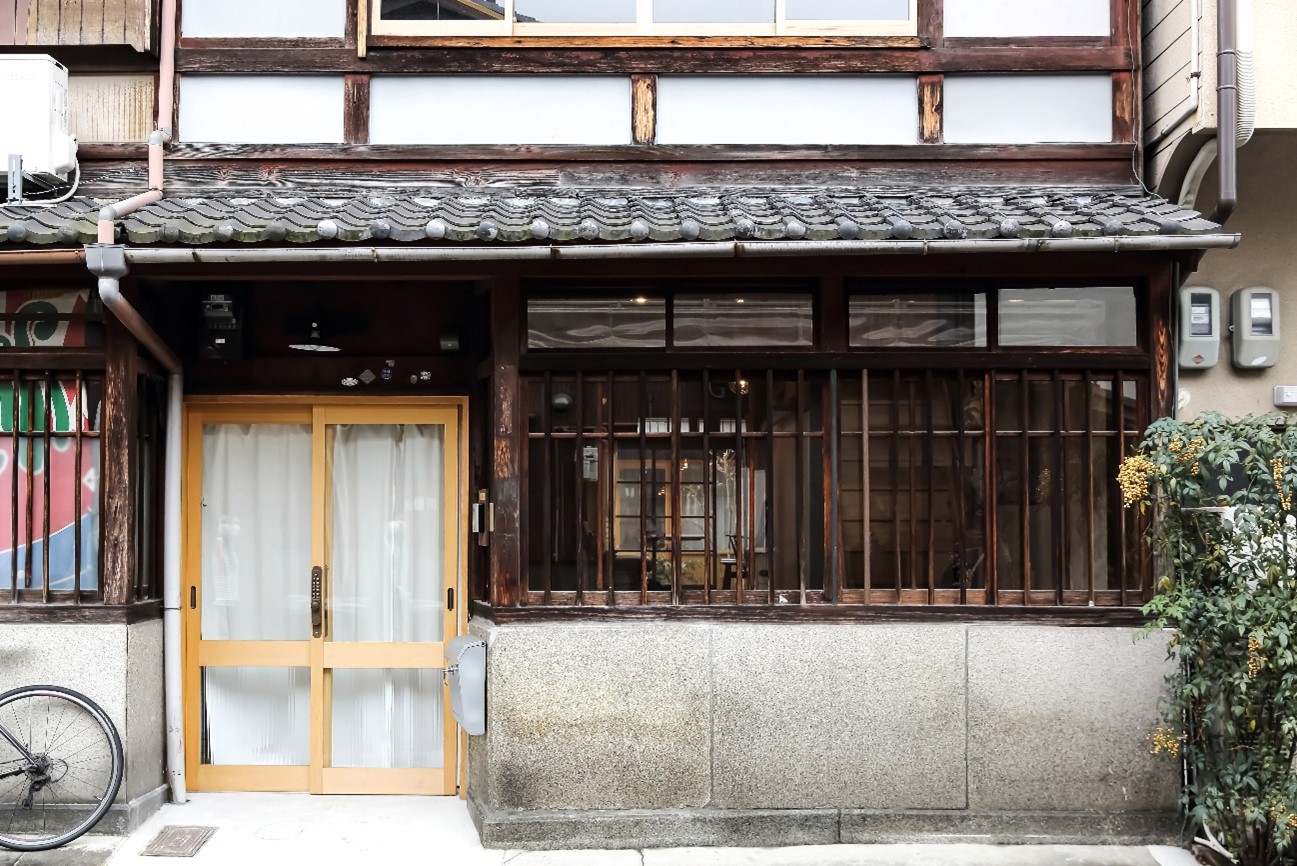
Kyoto Machiya Rental Model Project※Mobius Inc., which established its base in a traditional Kyoto townhouse, is a company that aims to deliver culture, services, and products to the world through the latest technology and marketing. We asked Kengo Tanaka, Representative Director and Fellow, about the reasons for choosing a Kyoto townhouse as their office and how they are utilizing it.
* Kyoto townhouse rental model project
The Kyoto City government is undertaking a project to lease traditional Kyoto townhouses from their owners, sublease them to businesses that utilize them, and foster future generations of enthusiasts.
Profile of a Kyoto townhouse
This Kyoto townhouse, built in the early Showa period, had been vacant for about five years. Dye was found in a small shed in the back garden, suggesting it was used as a dyeing factory where people lived and worked together. The owner utilized Kyoto City's Kyoto townhouse rental model program, and as the first project selected by the city, it was renovated into an office and residence, and is currently occupied by Mobius Co., Ltd.
Tanaka's Profile
Representative Director and Fellow at Mobius Co., Ltd. After graduating from university, he worked at Amazon Japan G.K., and then founded GROOVE Co., Ltd. in 2015, followed by its subsidiary, Mobius Co., Ltd., in 2021.
> GROOVE Co., Ltd. (This link will take you to an external website)
> Mobius Co., Ltd. (This link will take you to an external website)
A Kyoto townhouse, approximately 90 years old, is being used as both an office and residence for an IT company.
This traditional Kyoto townhouse is located in the Mibu area of Nakagyo Ward. It's close to Shijo Street, so there are many city bus routes, making it a convenient area to live in. Blending seamlessly into this neighborhood is one traditional Kyoto townhouse, which is the office of Mobius Co., Ltd. It's a three-room building in a row, reminiscent of the long, narrow "eel's bed" style typical of Kyoto townhouses.
Opening the sliding door at the entrance reveals a stylish space that resembles a café. The comfortable-looking sofas, the stylish lamps hanging from the ceiling, and the casually placed dried flowers all blend surprisingly well with the traditional Kyoto townhouse. Ms. Tanaka lives in this townhouse for about half of each month, prioritizing not only its functionality as an office but also its comfort as a place to live.
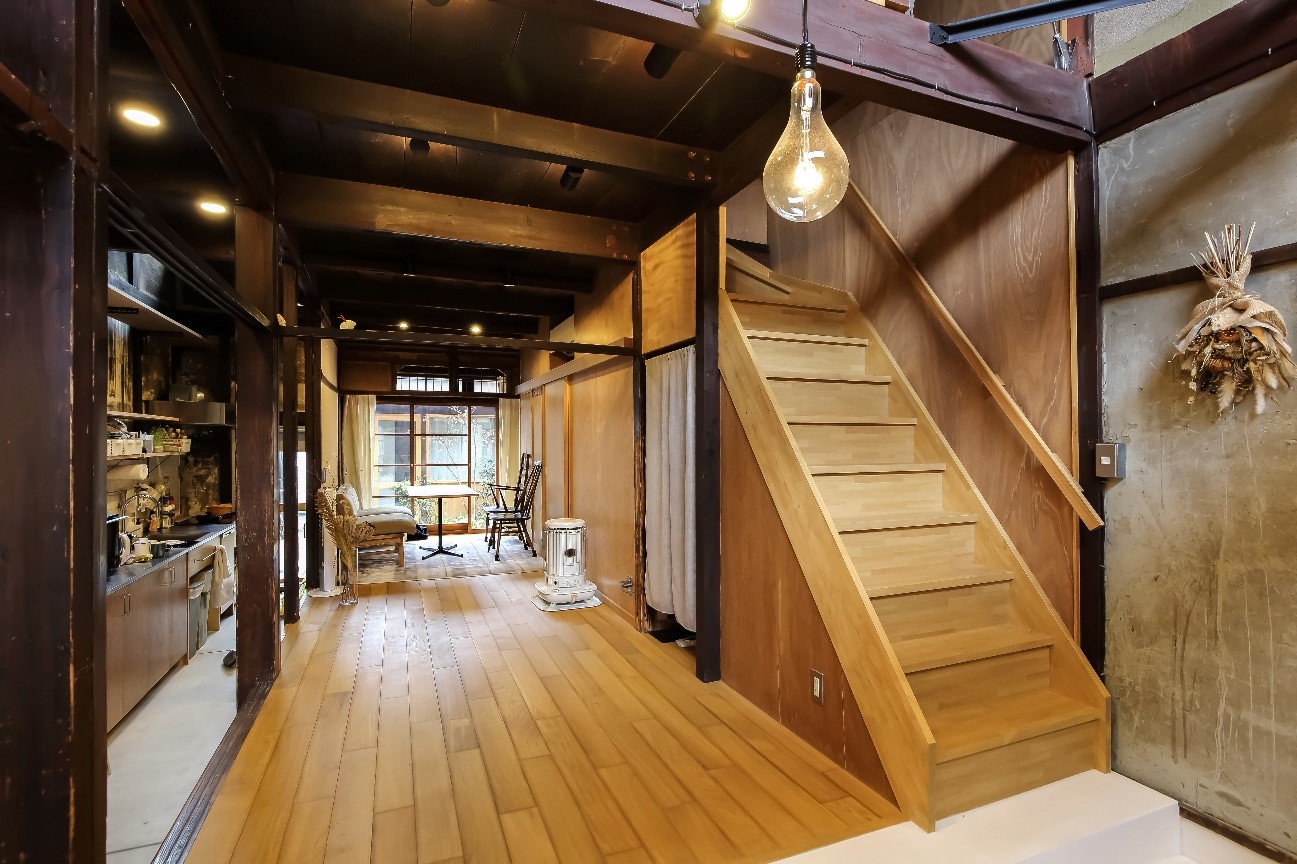
|
| While preserving the unique characteristics of a traditional Kyoto townhouse, it has been renovated to make it more livable. |
We established our base in Kyoto to ensure we never forget the essence of craftsmanship.
Mobius Co., Ltd. moved into this traditional Kyoto townhouse in 2021. Its parent company, GROOVE Co., Ltd., is a company that supports Japanese manufacturing, specializing in e-commerce. Mr. Tanaka himself was born into a long-established textile trading company in Osaka, and having felt close to "manufacturing" since childhood, he has supported numerous companies with the belief that he can "update Japanese manufacturing" through the power of e-commerce. However, he felt that if he continued to do business and live only in Tokyo, where his parent company is based, he would lose sight of the true value of manufacturing and what needs to be conveyed. Therefore, he established a subsidiary and decided to set up a base in Kyoto, a city with many long-established businesses and a well-rooted culture of traditional manufacturing. He believed that in order to pursue how to continue traditional products while changing their form, the real experience of living in Kyoto was invaluable.
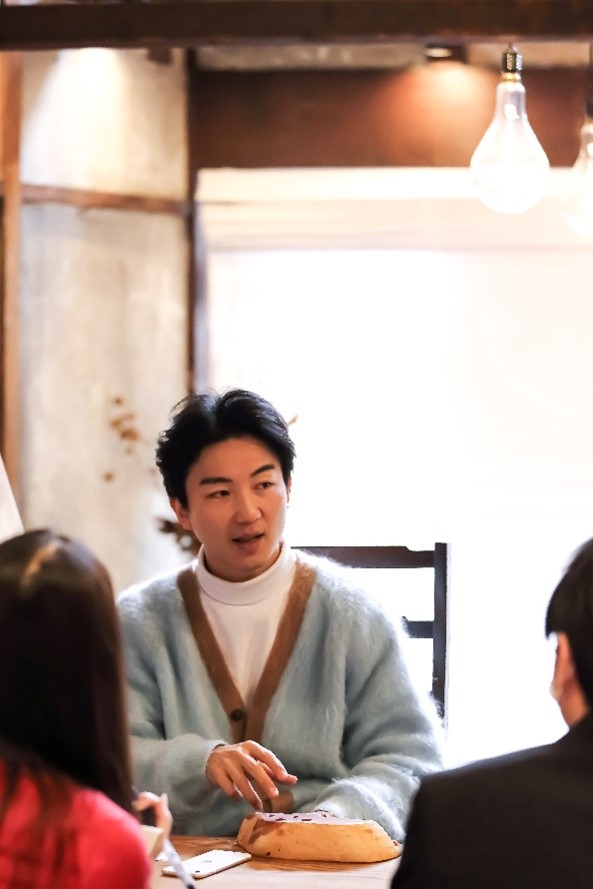
|
| Mr. Tanaka talks about his passion for Kyoto townhouses and craftsmanship. |
An encounter with a Kyoto townhouse that aligns with the company's vision.
While searching for a location that would suit the company's concept, an acquaintance introduced them to the first operator of Kyoto City's "Kyoto Machiya Rental Model Project." The idea of using a Kyoto Machiya as a base matched the company's philosophy of "valuing firsthand experiences of Kyoto," so they decided to move in. Tanaka added, "We decided to move in when the operator was still considering the plan, so being involved in the development process was a major factor in our decision."
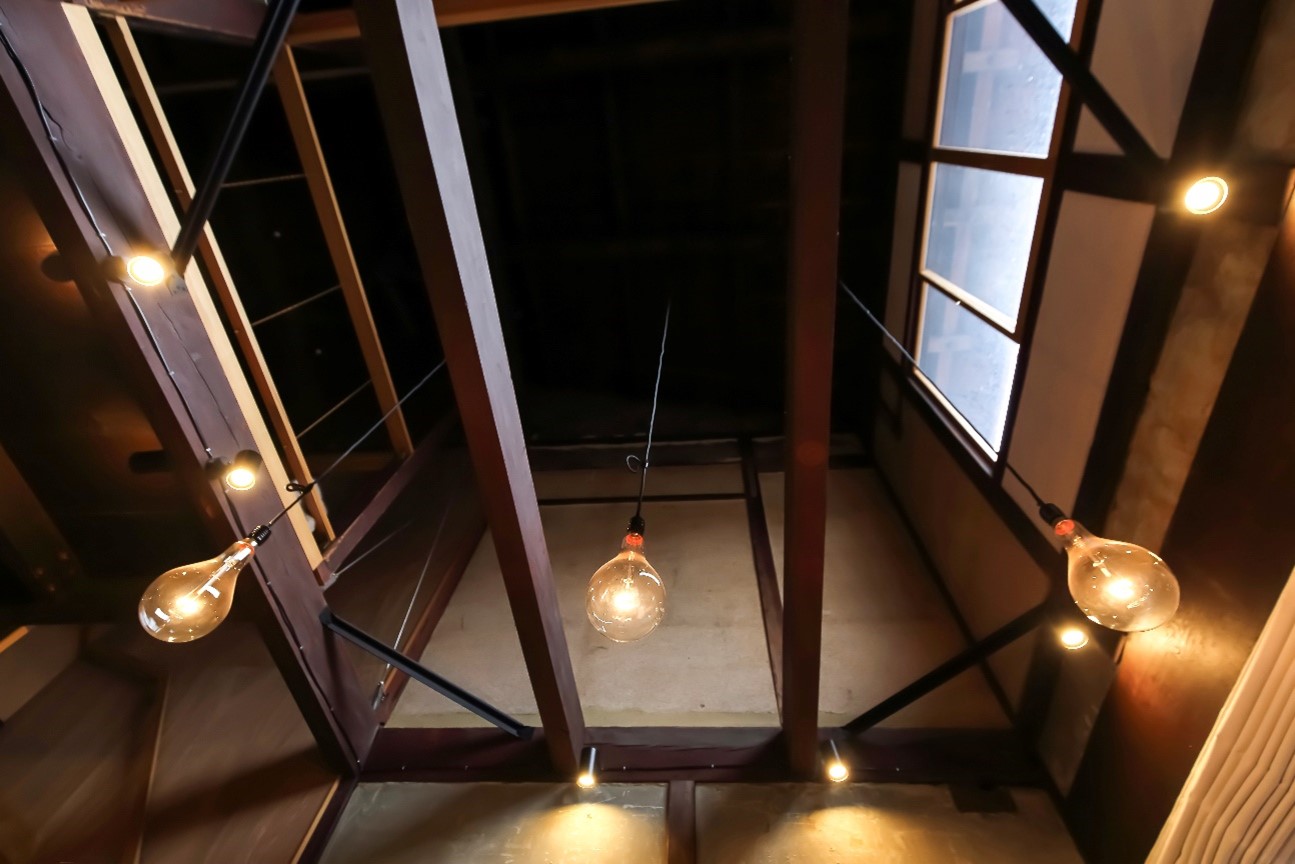
|
| A high-ceilinged space that makes use of the original beams. The lamps hanging from the ceiling are striking. |
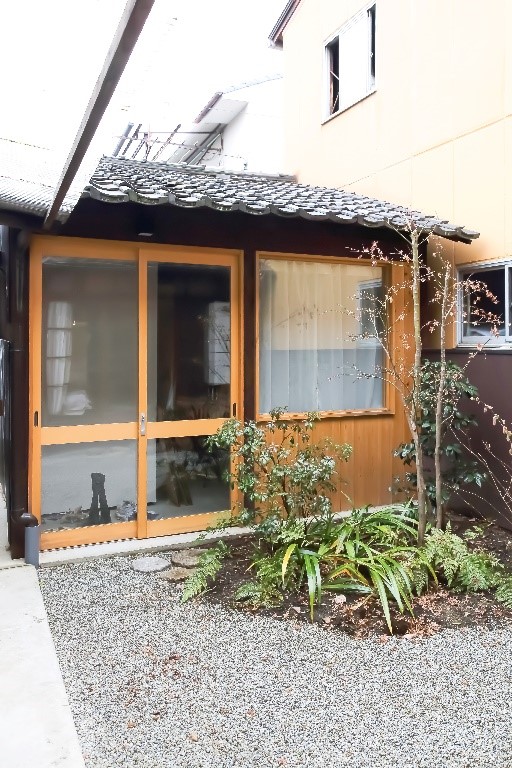
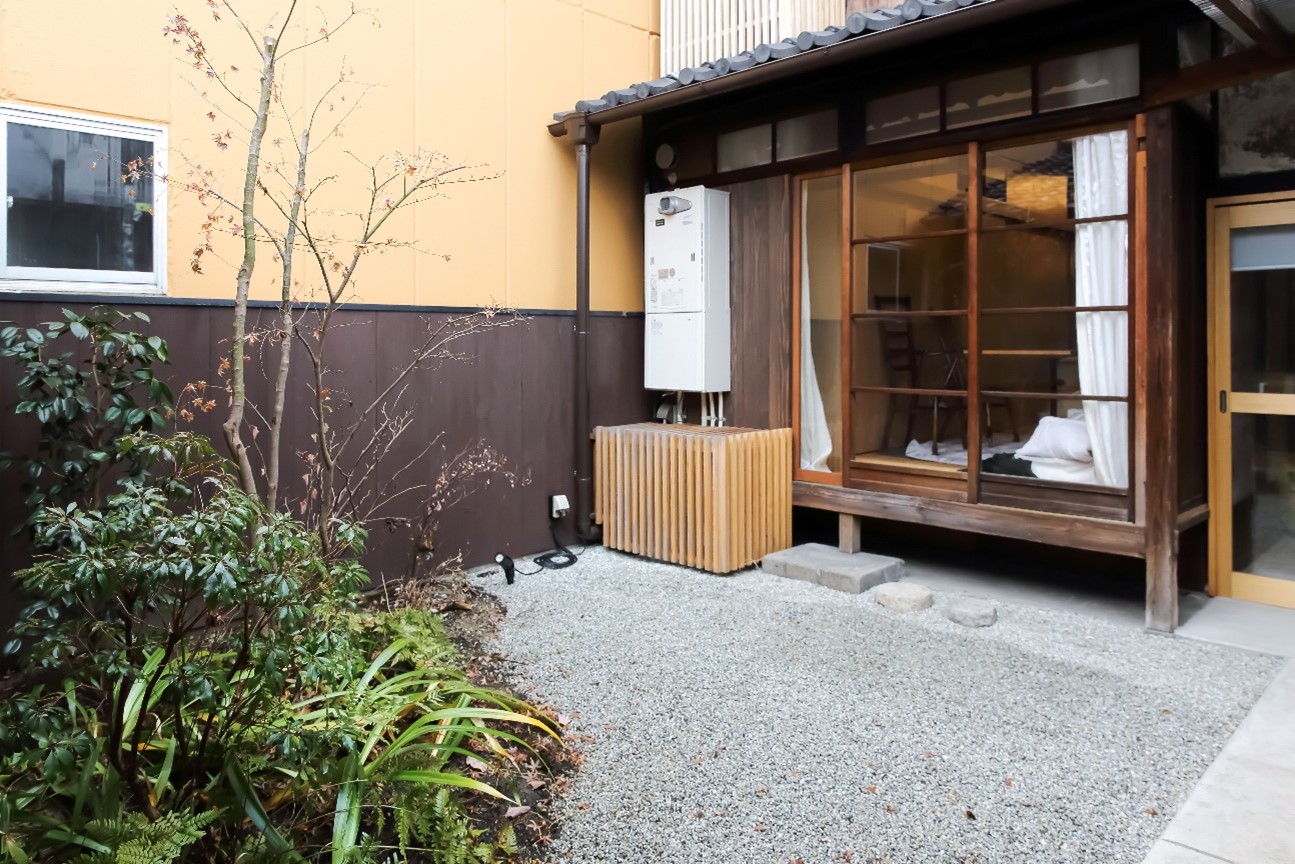
The renovation was carried out with the help of an architect I brought in, aiming to create a space that would be comfortable as both an office and a residence, while preserving the unique features of a Kyoto townhouse, such as the earthen walls, beams, ceilings, and earthen floor. As a result, the first floor is mainly used as an office space, and the second floor as a living space. Furthermore, there is a small garden and a shed at the back of the main house, which can also be used as a lab for recording videos and other things.
|
| A small hut at the back of the main house |
Things that can only be done because our base is a traditional Kyoto townhouse.
Ms. Tanaka says that she feels that time flows more slowly in Kyoto compared to Tokyo. When asked what makes her feel that way, she shared an anecdote about the owner of a traditional Kyoto townhouse bringing her bamboo shoots. "In Tokyo, the owner would never bring you bamboo shoots like that. These little acts of communication remind me that rationality isn't everything, something that we tend to forget when we're only focused on business. Living in a traditional Kyoto townhouse makes me appreciate the importance of the little things that are integrated into everyday life," says Ms. Tanaka.
|
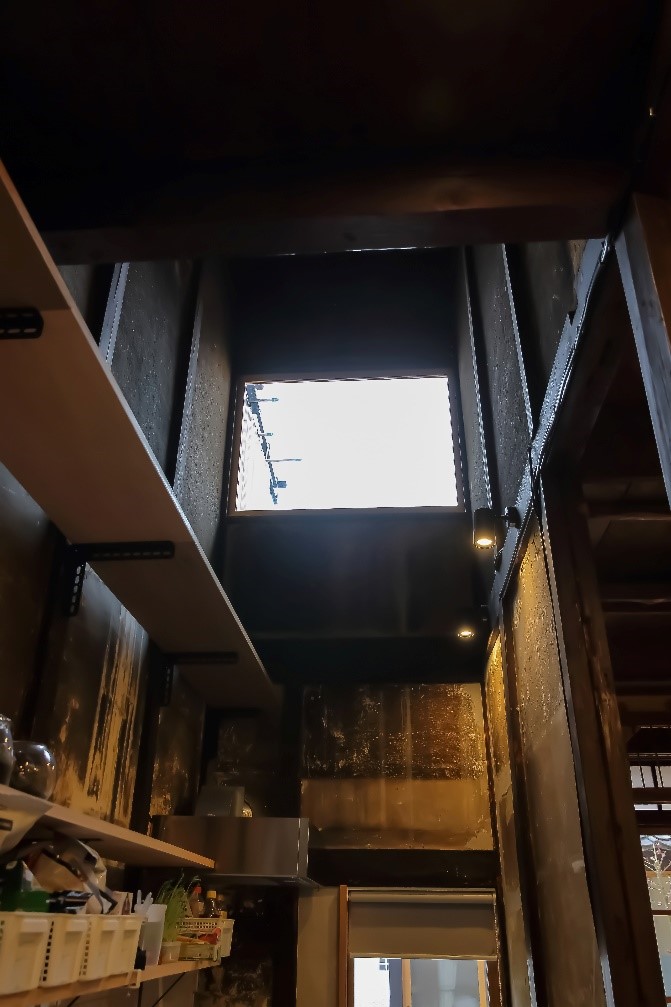
| Even after the renovation, the kitchen stove remains in its original state. |
Actually, it seems that the original intention was to give this Kyoto townhouse more office functions, but currently, it mainly serves as a "base." The reason for this, he says, is that having a Kyoto townhouse as a base makes it easier to visit places that are difficult to reach directly from Tokyo. By actually visiting the locations and deepening interactions with producers, it leads to a sense of trust, and it becomes easier to convey Tanaka's desire to "help spread truly good products." In addition, living in a Kyoto townhouse has the advantage of being a conversation starter and an easy way to demonstrate an interest in craftsmanship and traditional things. "I'm also thinking that it might be interesting to add another Kyoto townhouse as a base in a few years as part of the future business development." We learned about a new business style that not only has office functions in Kyoto, but also uses Kyoto as a base to expand business to other regions.
|
| The main house as seen from the back garden. Light streams in through the large windows. |