
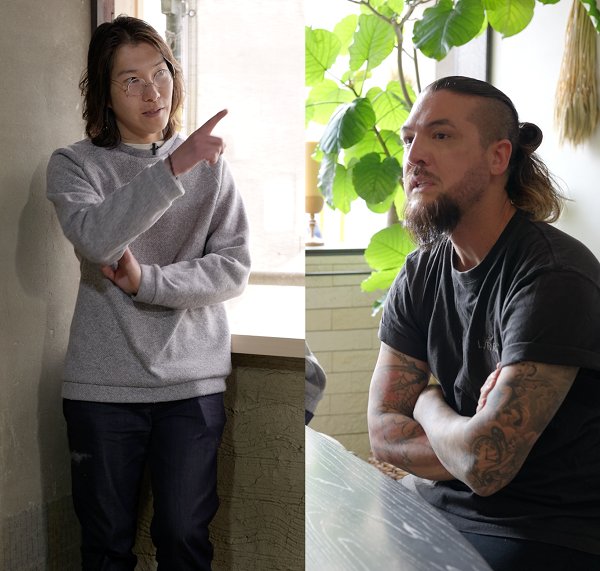
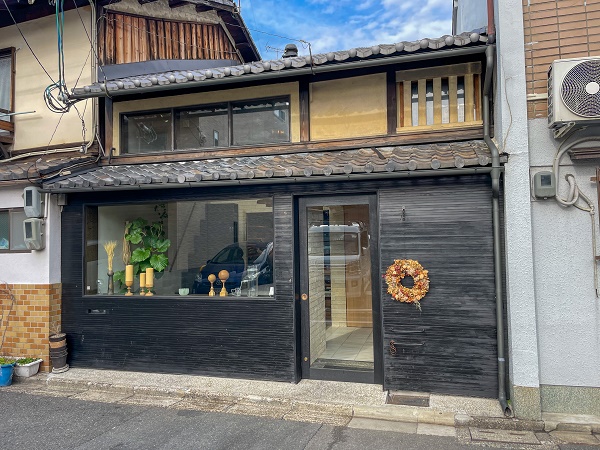
LURRA°, a restaurant that opened in 2019 in Higashiyama Ward, Kyoto City, is a renovated Kyoto townhouse that is over 150 years old. While the exterior retains the charm of a traditional Kyoto townhouse, stepping inside reveals a space that is quite different from the impression given by the exterior. We spoke with Takumi Miyashita, General Manager of LURRA°, and Chef Jaykab Kia about the background and thoughts behind utilizing the Kyoto townhouse.
Profile of a Kyoto townhouse
Located on the 2nd floor of Tsushi, just a 1-minute walk from Higashiyama Station on the Kyoto Municipal Subway Tozai Line.※This is a traditional Kyoto townhouse. It had been vacant for about three years and was deteriorating, but thanks to the encounter between Ms. Miyashita and Mr. Jaycub, it has been brought back to life and is now being used as the restaurant LURRA°.
* The ceiling on the second floor is lower than usual. This style was commonly used until the late Meiji period.
Takumi Miyashita's Profile
LURRA° General Manager. Born in Tokyo. FranceMichael BrasHe trained there. After returning to Japan, he switched to service and worked as a sommelier in restaurants in Tokyo and Osaka. He then went to Australia, Melbourne...VUE DE MONDEHe gained experience in New Zealand.ClooneyHe contributed to the restaurant winning three hats as head sommelier.
Jaykab Kia's Profile
Born in California, USA. After gaining experience in Los Angeles and Tokyo, he moved to Denmark.NOMAHe honed his skills there and accompanied the team to Noma Tokyo. During his time as head chef at Clooney in New Zealand,Cuisine Received 3 hats in the Good Awards.
An encounter with a Kyoto townhouse over 150 years old
LURRA° was opened in Higashiyama Ward, Kyoto City, as a joint venture between three people, including mixologist Sakaibe, after Miyashita and Jaykab, who were both in training at the time, met at a restaurant in New Zealand.
When Jaykab was working at a restaurant in Tokyo, he visited Kyoto and fell in love with the city's atmosphere, which was completely different from Tokyo. Later, when the idea of opening a restaurant in Kyoto came up, he casually started looking for a property, thinking that a traditional Kyoto townhouse would be ideal.
"I'd heard that it's hard to find a good property in Kyoto unless you're lucky, but things went pretty smoothly for us," said Jay Cub.
In February 2018, an acquaintance asked me, "There's an interesting property that's become available, would you like to come and take a look?" That's how I came across the Kyoto townhouse, which is now the location of LURRA°, and is over 150 years old.
"When I first went to see this property, Mr. Miyashita was in Tokyo, but I knew this was the only place. If we were going to do it, it had to be here," says Jay Cub.
|
Why did you choose a Kyoto townhouse?
Miyashita and Jay Cub, who have trained at famous restaurants around the world, why did they decide to open a restaurant in a traditional Kyoto townhouse?
"I love history, and I was drawn to the charm of Kyoto townhouses, so I wanted to preserve them. I thought there was no reason not to open a shop in a Kyoto townhouse if I were to open one in Kyoto. It might be a little inconvenient to live in, but if I'm going to use it as a workplace, there's a different approach," says Jay Cub.
Miyashita also said, "When I thought about the city of Kyoto, I had a strong desire to do some kind of business in a traditional Kyoto townhouse. Even from an overseas perspective, Kyoto is synonymous with the atmosphere of traditional Kyoto townhouses, and I believe that what is connected to that creates the city's culture, so I decided from the beginning that I would renovate a traditional Kyoto townhouse and start a business there."
|
Points we focused on when renovating the building into a restaurant
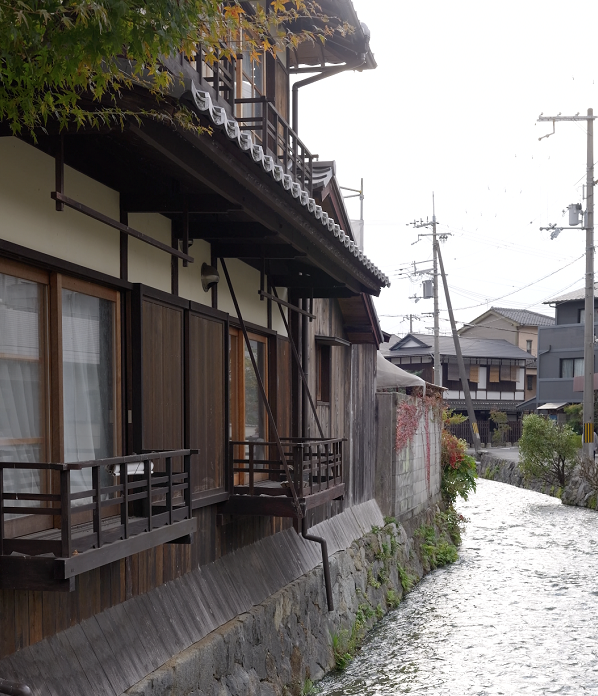
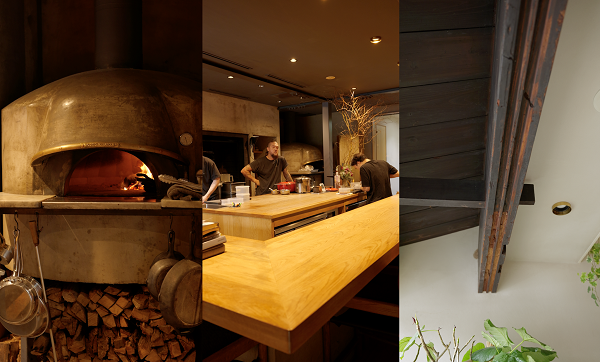
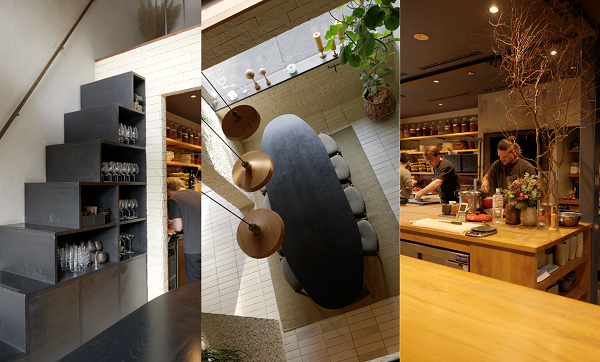
While LURRA°'s exterior has been renovated to retain elements and the atmosphere of a traditional Kyoto townhouse, stepping inside reveals a Western-style restaurant space that contrasts with the exterior image, featuring a kitchen with a large wood-fired oven and an L-shaped counter table surrounding it. Yet, even within this space, you can still feel the homey atmosphere unique to a Kyoto townhouse. While there are many restaurants that utilize Kyoto townhouses or old houses, LURRA° made a conscious effort to create distinct spaces for the exterior and interior, and to incorporate both the best of Japan and new elements, such as preserving the earthen walls and existing beams.
Furthermore, they intentionally chose not to install gas in the building, in order to recreate the state of Kyoto townhouses from the old days before gas was available.
"I wanted to cook in a more primitive way. Not just in Japan, but in Rome and Copenhagen too, I feel that older buildings are more attractive and valuable than modern ones. Even just having a single cool beam gives them a different kind of charm compared to modern buildings," says Jaykab.
Miyashita also said, "Wooden buildings tend to deteriorate more than you'd expect once they're over 100 years old, so the renovation costs were higher than I imagined. But now, looking back, I'm glad I chose a Kyoto townhouse. Its greatest appeal is that it allows you to truly express the essence of Kyoto. While the building size is somewhat limited, the size of a Kyoto townhouse is also great because it makes it easy to create the perfect distance between the chef, kitchen staff, and customers when you have a counter-style restaurant."
|
Customer reactions
"Ninety percent of LURRA°'s customers are from overseas. Many of them have a strong image of Kyoto as a traditional Kyoto townhouse, but when they enter the shop, they are surprised to find that it is a different space from what they imagined from the outside. Customers are very pleased with the gap between the Kyoto-like exterior and the interior, and we also like that it allows us to preserve the Kyoto character in the town and region. Given the nature of Kyoto, people who want to work in Kyoto are attracted to the charm of Kyoto and start businesses with the desire to do something to improve Kyoto, so running a business using a traditional Kyoto townhouse is something we can be proud of," says Miyashita.
They often receive comments like, "I want to live in a house like this."
|
Thoughts on the current situation of declining numbers of Kyoto townhouses
With traditional Kyoto townhouses being demolished and their number decreasing year by year, Jaykab expresses concern, saying, "If Kyoto doesn't have traditional Kyoto townhouses, there's no reason for it to be Kyoto." Miyashita shares a similar sense of crisis.
"We've seen on the news that the number of traditional Kyoto townhouses is decreasing. If the number of townhouses continues to decline and disappear, we think that will diminish the unique character of Kyoto, so we are conscious of that."
"Around LURRA°, there are Kyoto townhouses that have been designated by the city for preservation, but since it is an area with a large elderly population, I think some of these townhouses will become vacant in the future. I don't know how they will be used, but rather than simply tearing them down and turning them into parking lots, I hope that they will be turned into something more positive, or that activities will be able to bring together people who want to do something together using Kyoto townhouses, even if it's not us who are doing it."
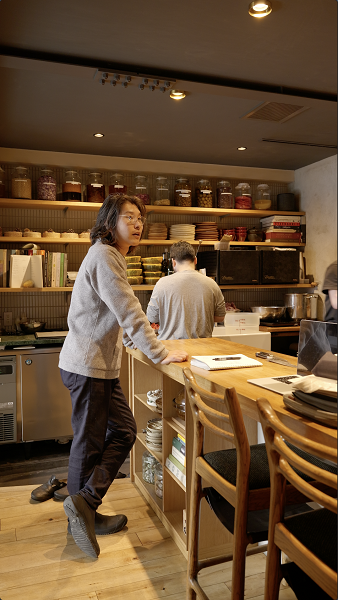
Furthermore, Miyashita is also preparing for a new business venture near LURRA°, utilizing another traditional Kyoto townhouse. The plan is to create a complex facility that will house a Kiyomizu-yaki pottery studio, a restaurant open morning, noon, and night, and a shared office space.
"We want to do things that can only be done in that place. And by 'place,' I don't just mean the area itself, but in the case of the project we're currently preparing, I think it's important to have a pottery studio or to team up with traditional crafts and industries that are tied to Kyoto. When we think about the area, by distributing various shops that people can use on a daily basis and encouraging them to stop by different shops, a cycle will be created in the town. I personally believe that if we can do that, the town will become more vibrant."
|
What kind of use is suitable for a traditional Kyoto townhouse?
Beyond their original purpose as residences, Kyoto townhouses are being used in a variety of ways to meet different needs.
Miyashita and Jaycub chose to use the space as a restaurant, but they also think that using it as a bookstore, cafe, or coffee shop would suit the atmosphere of a traditional Kyoto townhouse, and they hope that having such shops scattered throughout the town will increase foot traffic.
"From both a Japanese and a foreigner's perspective, Kyoto townhouses have a distinctive Kyoto feel and are very photogenic for social media. I think they're relatively easy to run as restaurants. Renovating a Kyoto townhouse is quite costly, so I think businesses that can run smoothly are the ones that will be able to properly preserve the townhouses in the future."
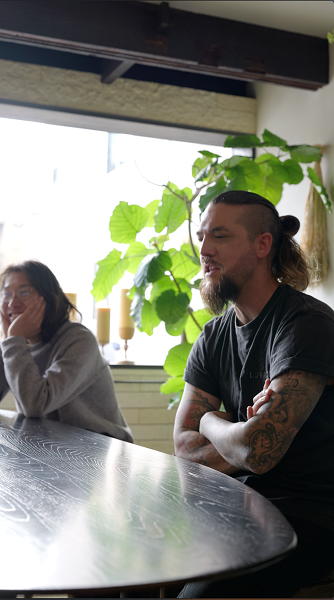
--I am excited to see what new challenges these two young people, who envision the future of Kyoto together with traditional Kyoto townhouses, will take on in the future.
|