
Mr. Ikegawa has moved into a traditional Kyoto townhouse.
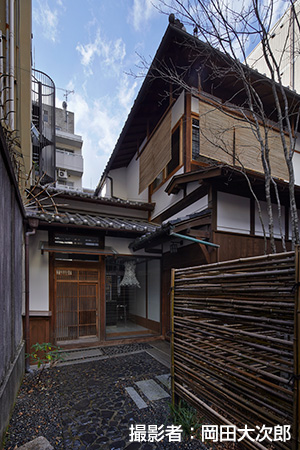
The now-rare "Taihi" cypress wood was used extensively.
The Ikegawa residence is not a typical merchant-style Kyoto townhouse with a front roof. It stands quietly in a slightly secluded spot at the end of a private passageway. Apparently, it was one of the first two properties that were shown to the owner when he began searching for a place to live in a Kyoto townhouse.
The house had apparently been vacant for about 30 years, and was filled with belongings and covered in dust, mud, and mold. However, the master carpenter of a traditional townhouse was convinced that the structure and construction were solid, the building was hardly tilted, and it was a well-maintained and cherished building, which allowed him to convince his family.
Key points of the renovation
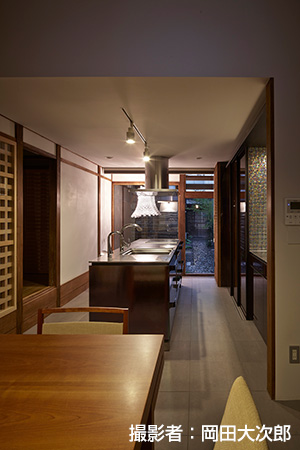
Kitchen and dining area utilizing a courtyard
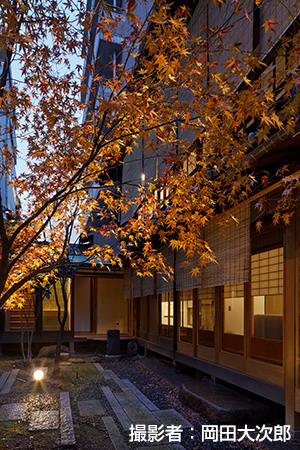
For traditional townhouses, the garden is an important element that connects the interior and exterior spaces.
Because the ownership had changed several times, and there were extensions built right up to the edge of the property line, the renovations were primarily focused on reducing the size of the building and restoring it to its original form.
The structural columns remain.While taking sure measures to address the deteriorated parts, the focus is not on restoring the building to its original state, but rather on respecting the value of the building that has been passed down through generations. The renovation is being undertaken with the aim of ensuring that the building will last for the next 100 years and be passed on to future generations by "doing the renovations that need to be done now and that can be done now for this building." The passageway courtyard has been transformed into a tiled earthen floor kitchen and dining space, taking into consideration the comfort and values of modern living.
At the Ikegawa residence, various experimental approaches have been taken to ensure a comfortable life in a traditional Kyoto townhouse. These include cleverly designed wooden insulated fixtures and underfloor heating to combat the cold, as well as seismic retrofitting using wooden lattice load-bearing walls that allow visibility into the back and let in light.
The charm of traditional townhouses
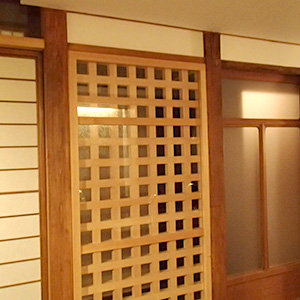
The use of wooden lattice load-bearing walls improves earthquake resistance.
Mr. Ikegawa, an architect himself, is so drawn to Kyoto townhouses that he chose one as his own home. He says that April and May are the most pleasant months to live in one. He also appreciates the richness of being able to enjoy the changing seasons, such as changing the fixtures in the summer, which is a unique plus and appeal of Kyoto townhouses.
Tips for living in a Kyoto townhouse
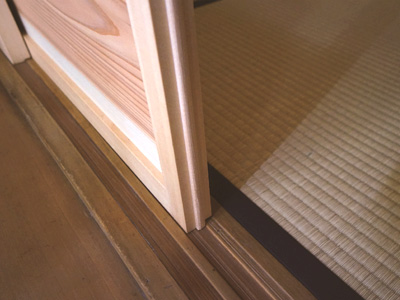
Wooden joinery with reduced gaps and improved insulation.
People have different views on traditional townhouses. Some are committed to preserving them, while others want to change them to suit their lifestyle. There is no right or wrong answer. That's why homeowners need to think about it, and they need to consider not only how it affects themselves, but also how it impacts other people and the town, he said.
The word "fushin" originally means "to contribute to society." Opportunities to build or repair buildings are also opportunities to engage with the community. Although they purchased and own their home, they were aware that in the long history of the building, it was "borrowed," and they were conscious of passing it on to the next generation.