
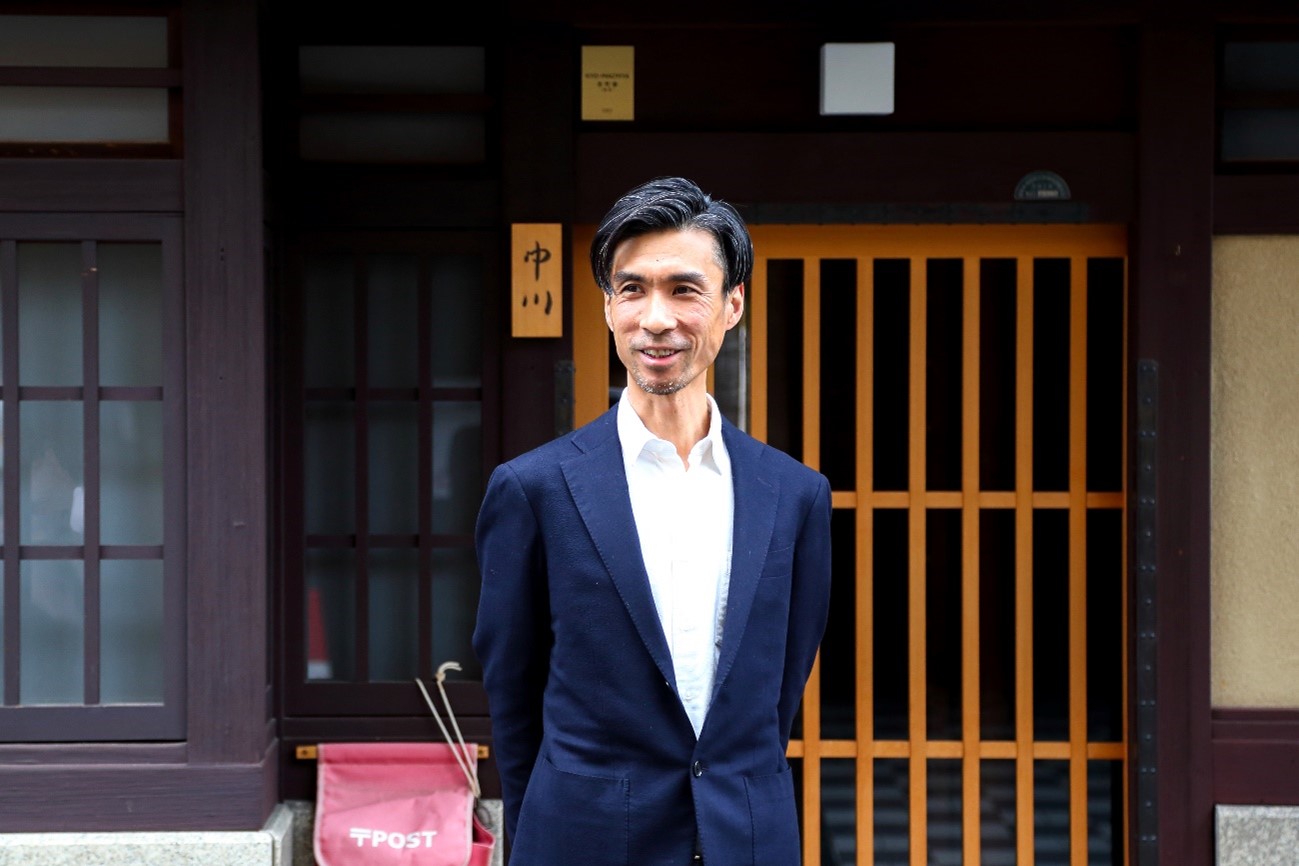
Kyoto townhouses differ slightly in layout and design depending on the historical context and the family business they were built for.※Nakagawa Yukitsugu, the representative of Nakagawa Architectural Design Office, has renovated a traditional Kyoto townhouse, known as a "weaving loom," which is ideal for weaving, and uses it as both his office and residence.KojiWe asked Mr./Ms. [Name] about their thoughts on Kyoto townhouses and their commitment to architecture.
* This style of Kyoto townhouse is commonly seen in Nishijin, an area that was once a thriving center of the textile industry. Unlike typical Kyoto townhouses, the front and back areas are used differently, with the living quarters in the front and the workshop in the back.
Profile of a Kyoto townhouse
This Kyoto townhouse, originally built as a weaving factory, has records dating back to 1877 (Meiji 10). It was renovated in 2016 with support from the Kyoto Townhouse Urban Development Fund, operated by the Kyoto City Landscape and Urban Development Center. Since then, the owner, Mr. Nakagawa, has continued to renovate the annex and connecting corridors, using it as a combined living and working space. It is a designated Kyoto townhouse under the Kyoto Townhouse Ordinance.
> Kyoto Machiya Town Development Fund
> Designation system based on the Kyoto Machiya Ordinance
Nakagawa's Profile
After graduating from the Department of Architecture, Faculty of Art and Design, Musashino Art University in 2002, and working at an architectural design firm, he established Nakagawa Koji Architectural Design Office in 2014. He is also active as a Kyoto City Cultural Property Manager (Buildings).
> Nakagawa Koji Architectural Design Office (This link will take you to an external website)
An encounter with a traditional Kyoto townhouse in Nishijin
This Kyoto townhouse is located in an area called "Nishijin" in Kamigyo Ward. It is a town known for Nishijin weaving, and in the past, many thread shops and weaving shops lined the streets. However, as time has passed, the number of businesses that have gone out of business has increased, and Kyoto townhouses that served as both weaving factories and residences have become unnecessary and are sometimes demolished. This Kyoto townhouse was originally a weaving shop's townhouse, and Mr. Nakagawa came across it when he saw it listed in a flyer as a property for sale with an old house attached.

|
| Kyoto has many historical buildings, such as traditional Kyoto townhouses, and you can find design inspiration by taking a walk around the neighborhood. Apparently, some of the designs, like the insect-cage windows, were collected during walks and incorporated into the renovations. |
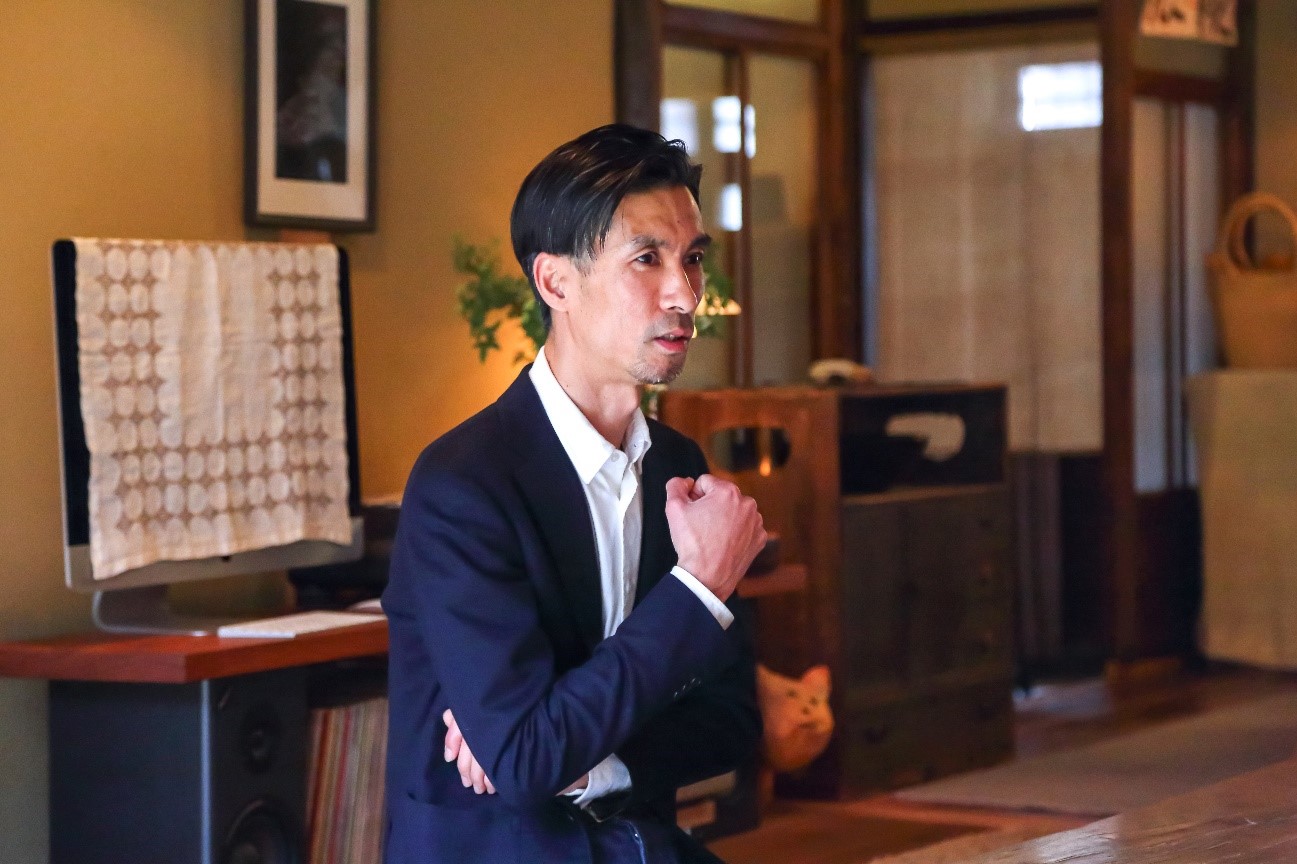
Ms. Nakagawa is from Fukuchiyama City, Kyoto Prefecture, and grew up in a traditional townhouse in a castle town. Her family ran a pharmacy, so she grew up naturally living and working together. While traveling the world as a backpacker during her student days, she says that what captivated her was not famous architecture or tourist spots, but the street spaces where she could feel the lives of the local people. The vibrant lives of the local people and the buildings she encountered there were fascinating. She came to believe that Japan also once had many such charming streets, and that she did not want to lose them. This led to the desire to protect the Kyoto townhouses and streetscapes that have shaped them. Also, she was taught at university to think about architecture with the premise of not demolishing buildings, rather than demolishing them and building new ones, so as an architect, she values "making improvements to buildings so that people can live comfortably without demolishing them."
|
| Mr. Nakagawa talks about his feelings towards Kyoto townhouses and his commitment to architecture. |
Renovation while respecting the building's history
After graduating from university, I worked in Tokyo, but when I became independent, I chose Kyoto. Kyoto has many historical buildings, including traditional Kyoto townhouses, temples and shrines, and long-established shops. The skills of the craftsmen in wooden architecture and the quality of the materials are also high, and Kyoto resonated with Nakagawa's desire to preserve buildings without demolishing them. Since his family home was a combined workplace and residence, he had planned from the beginning to make his office a combined office and residence. He was looking for a place that was both peaceful and connected to the town, where he could balance work and life, and that's when he found his current Kyoto townhouse. "This Kyoto townhouse is an old building from the Meiji era, with a north-facing entrance and a garden, so it had many of the features I was looking for. Also, I had relatives living nearby, so I was familiar with the area, which was a big factor."
Furthermore, Nakagawa said, "While I am aware of the positive perception of Kyoto townhouses, they also have an image of being cold, hot, and inconvenient, and I've seen them being demolished around me. I wanted to personally demonstrate that Kyoto townhouses can be renovated to make them more livable so that this doesn't happen."
However, it seems that this Kyoto townhouse had not been well maintained for a long time, and the damage from leaks was quite advanced, requiring major repairs.
|
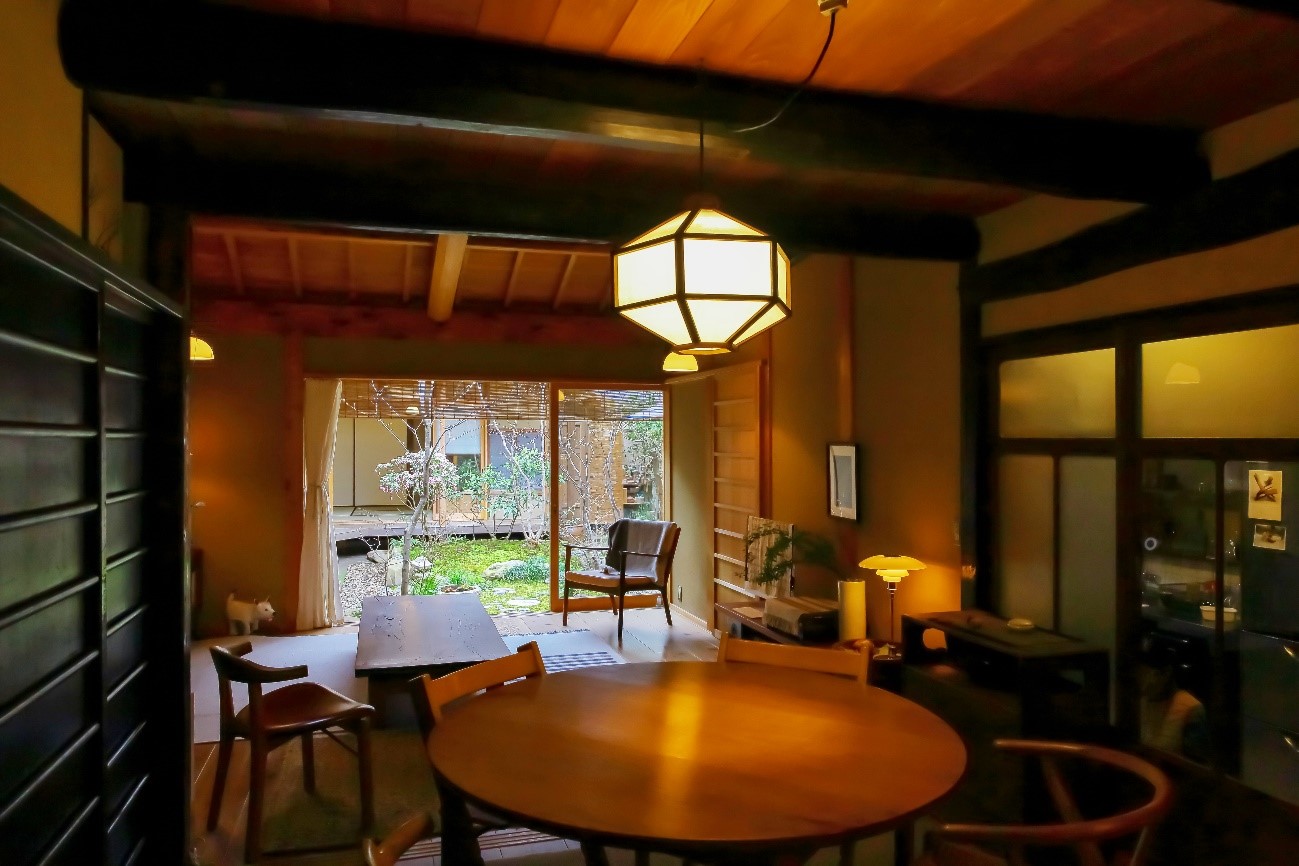
| This space serves as both an architectural office and a home. Apparently, his wife sometimes uses it as an art studio to hold classes. |
Mr. Nakagawa says that by deciphering the history of a building and thoroughly understanding the background and reasons for its construction on that land, it is possible to reflect the building's potential to the fullest in the renovation plan. For example, in this Kyoto townhouse, it was discovered through the use of unfinished logs for the beams of the main house and research into the land registry that the building was constructed in the early Meiji period or the end of the Edo period as rental housing for commoners, and that the original open-plan earthen floor space had been converted into a tatami room by adding floors, walls, and a ceiling. Mr. Nakagawa said that in order to make this Kyoto townhouse an even more attractive space, he restored it to the open-plan design characteristic of weaving houses. He also said that while it is essential to restore the soundness of damaged structures for the sake of the building, it is also important to make improvements such as insulation renovations so that the residents can live comfortably.

|
| The two rafters spanning the wall separating the Okunoma and Tooriniwa areas indicate that there was once no partition wall here, and instead, a large earthen floor space characteristic of weaving workshops. |
A work-life integrated design where you can actually experience practical lifestyle improvements.
In the densely built-up environment of the city, a garden that allows you to feel the rhythm of nature and the changing seasons of plants is an extremely important element for urban living. Not only does it improve sunlight and ventilation, but having time to connect with nature in your daily life, such as drinking tea on the veranda or weeding, leads to a time of healing for both mind and body, so they recommend that their customers also incorporate a garden into their homes.

|
| The well is still flowing, and the water is apparently used for watering the garden. |
"I think it's important not to change buildings to suit your lifestyle just because the need for them has disappeared, but rather to adapt your lifestyle to the building," says Nakagawa.
For example, while Kyoto townhouses are often imagined to be hot in the summer and cold in the winter, they can be made more comfortable by cleverly designing the openings, such as installing inner shoji screens behind glass doors. Being able to show clients these kinds of lifestyle improvements firsthand is a unique advantage of Kyoto townhouses, which combine work and living spaces. "I grew up in an environment where work and living were combined, and I also wanted to spend time with my children, so I created a space that serves as both an office and a residence. This Kyoto townhouse was originally a combined residence and priest type of house, so I think this way of living is a good step towards its original form."

|
| The office space is right inside the entrance. The bookshelves are packed with books on architecture. |
Living in a traditional Kyoto townhouse is about passing on your DNA to future generations.
Nakagawa says that unlike new buildings, Kyoto townhouses are full of a charm that can be passed down, even though they were built by someone else. "Kyoto townhouses have a long history, and they have been shaped little by little over time. During that time, there have been improvements and deteriorations. Often the older ones are better made, and you can feel the weight of time. That kind of interesting aspect is what makes them different from newly built houses."
Furthermore, they taught me that repairing and continuing to use Kyoto townhouses helps to preserve the DNA of Kyoto townhouses for future generations, and that by leaving even a small part of the seeds in the townscape, it will be possible to restore the appearance of Kyoto townhouses even 100 years from now.
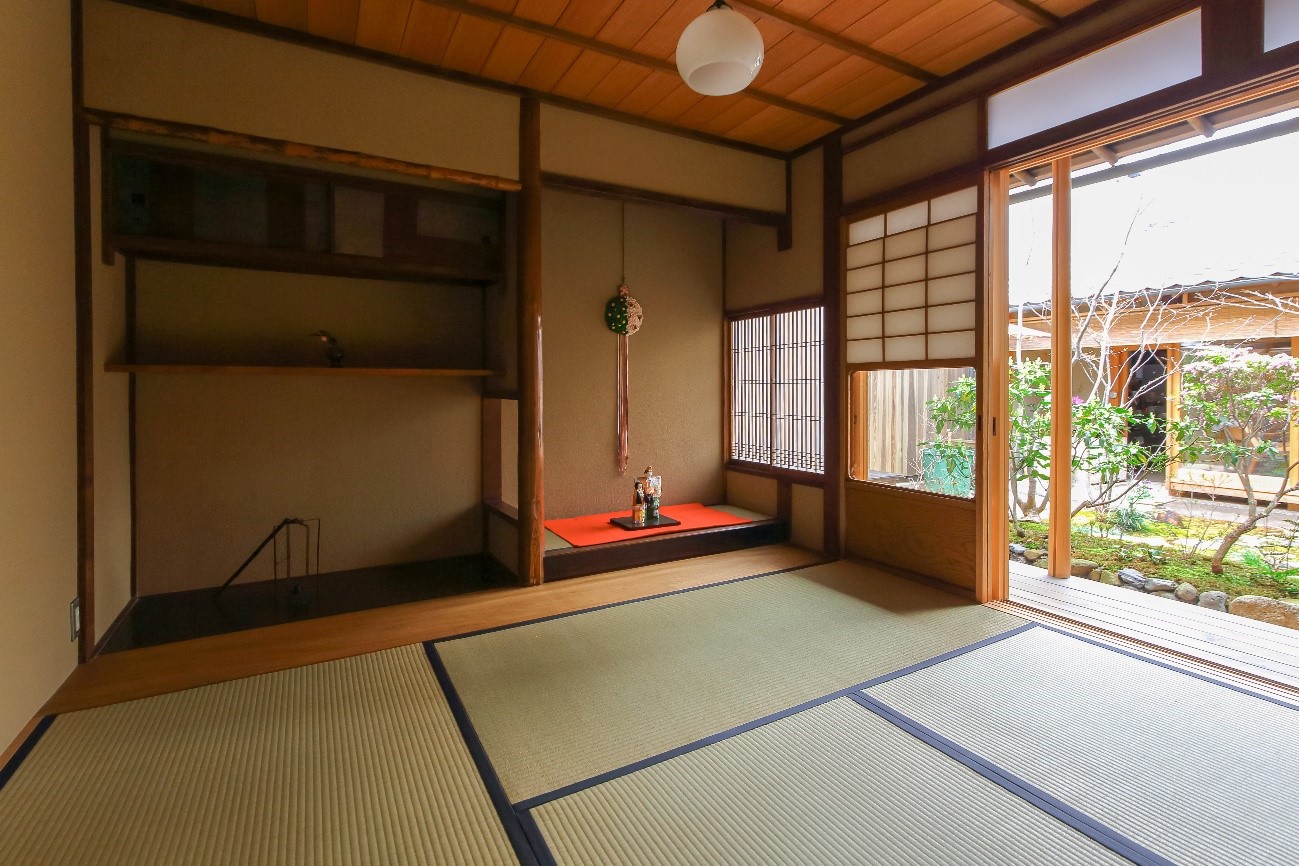
|
| This detached room, which was just renovated in March 2023, features seasonal decorations in the alcove and can also be used as a tea room. |
In this Kyoto townhouse, the gardenSanwadoThey sifted and tamped the soil in the garden, demolished the original walls of the connecting corridor and rebuilt them by mixing the soil, rearranged the original stones in the garden, and repurposed the main materials for the alcove in the detached room from the alcove in the main house from the Meiji era. They reused materials as much as possible if they had charm and potential. I am amazed by the pure materials and techniques that make these sustainable efforts, which produce extremely little industrial waste, possible, something that is in demand these days. Carefully using the original materials and utilizing them while moving closer to the original form of a Kyoto townhouse will also lead to properly preserving Kyoto townhouses for the future.

|
| The walls of the connecting corridor were made using soil that was reused after being dismantled for repairs. |